
Kirchlich Diakonisches Zentrum in Berlin-Neukölln
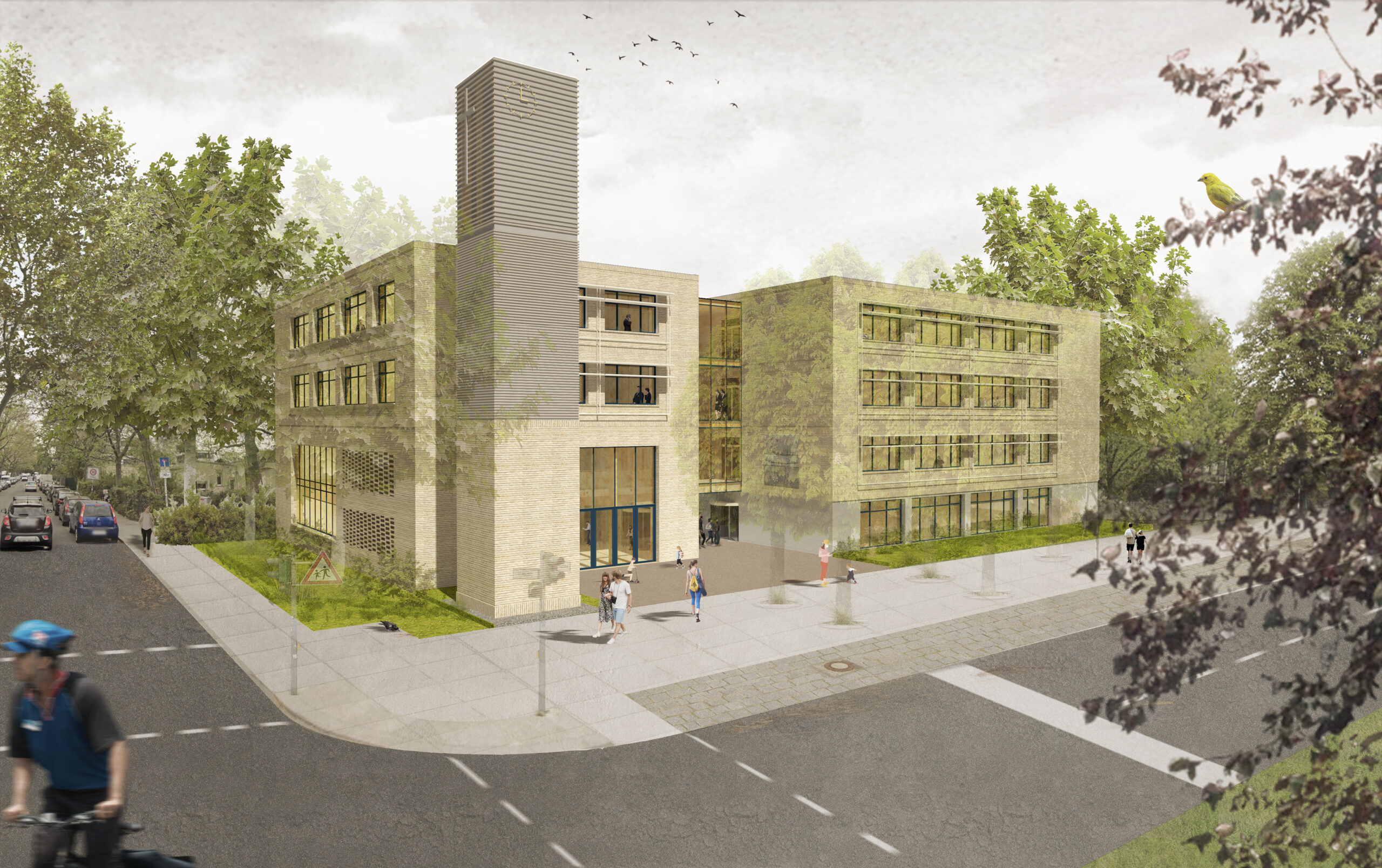
Mitten in Berlin-Neukölln, auf dem Gelände der Tabea-Gemeinde, entsteht ein neuer Ort der Gemeinschaft – ein Bürogebäude, das die Anforderungen moderne Verwaltung, soziales Engagement und Nachhaltigkeit miteinander verbindet. Das Bestandsensemble aus den 1960er-Jahren – mit Kindertagesstätte, dem Gemeindehaus mit Glockenturm und dem Pfarrhaus – wird durch einen Neubau ergänzt, der Verwaltung, Beratung und kirchliches Gemeindeleben vereint.
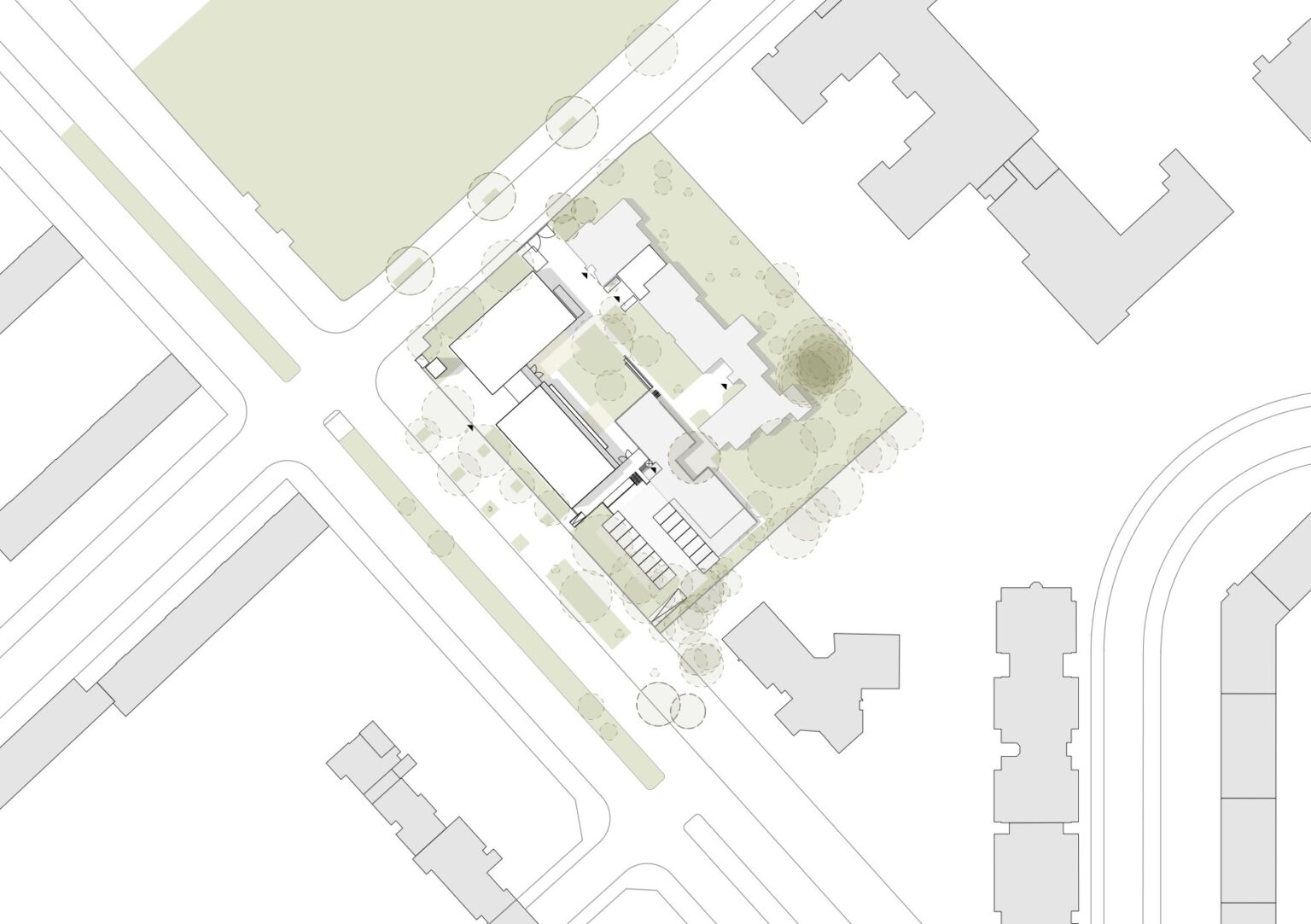
Das alte Gemeindehaus muss aus statischen Gründen abgerissen werden. Der Ersatzneubau reagiert auf den baulichen Zustand des alten Gemeindehauses und auf den gestiegenen Raumbedarf des Diakoniewerks Simeon. Zwei winkelförmig zueinander gestellte Baukörper markieren die Kreuzung an der Sonnenallee und bilden zusammen mit einem neuen Glockenturm und einem offenen Vorplatz eine einladende städtebauliche Geste. Ein verbindendes Bauteil in den Obergeschossen schafft eine räumliche Einheit und fasst einen geschützten Hof, der sich zur bestehenden Kindertagesstätte hin öffnet.
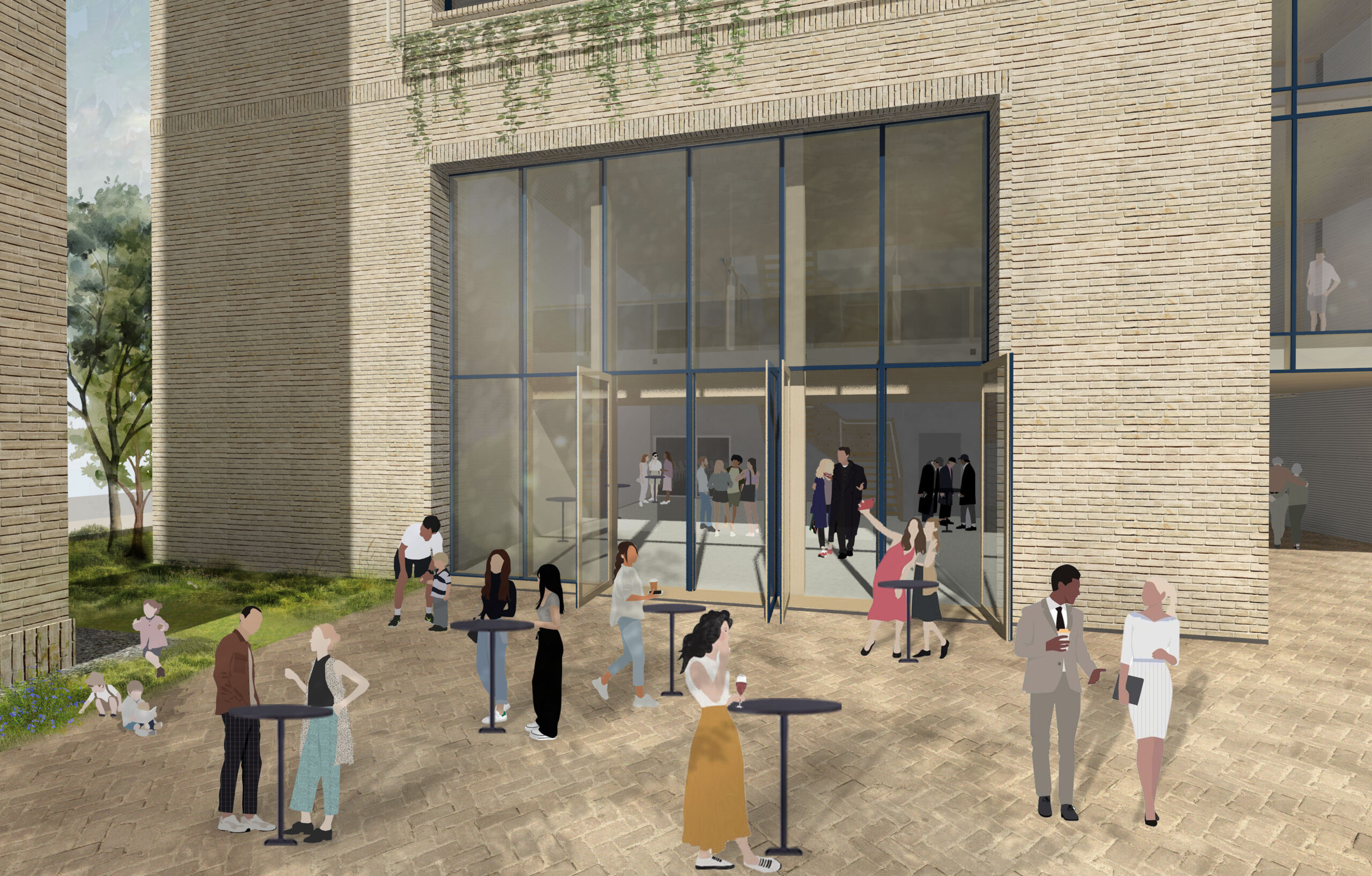
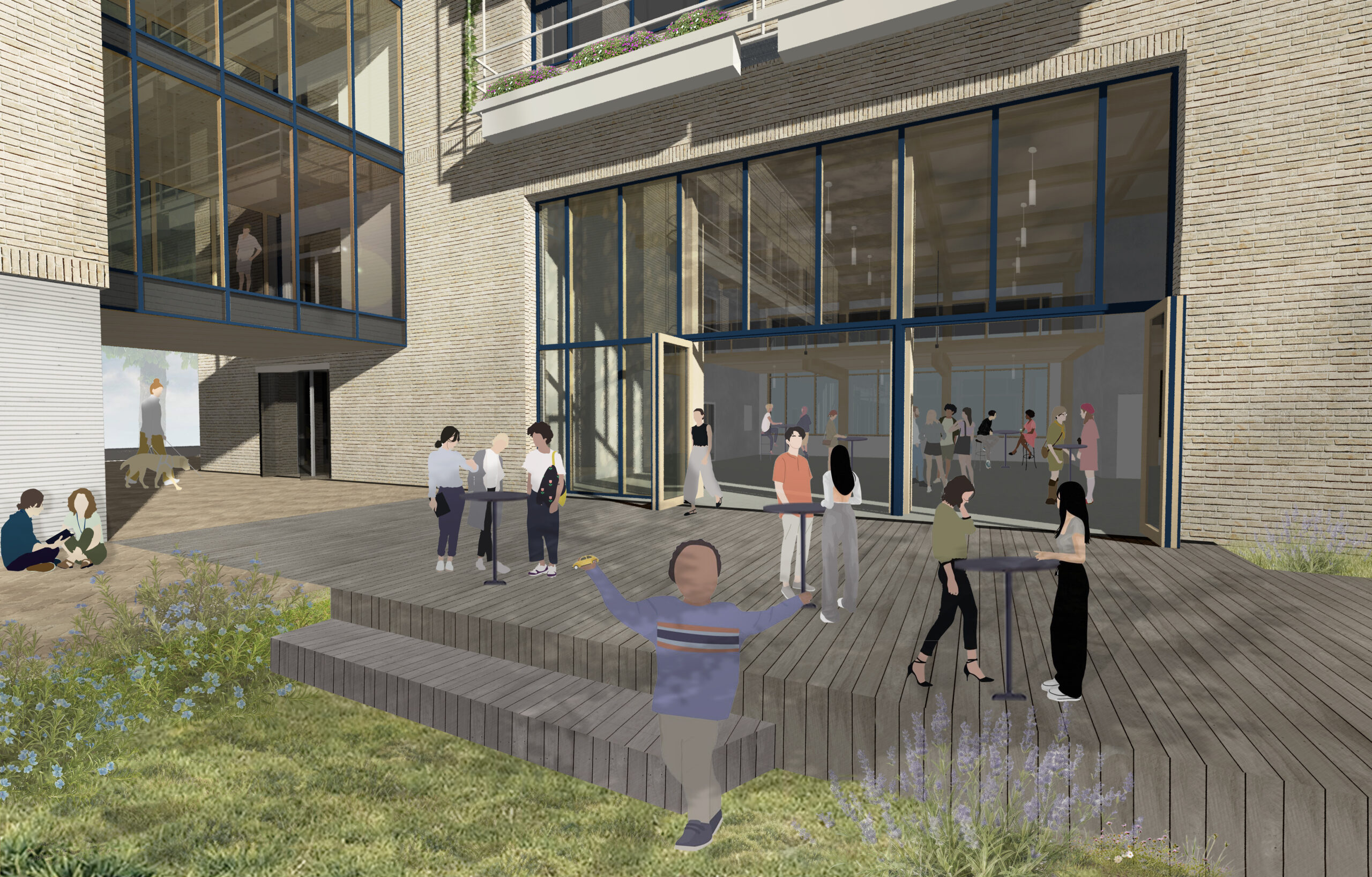
Im Erdgeschoss bildet ein großzügiger Multifunktionsraum das Herzstück des Hauses – ein Ort der Begegnung, der für Gottesdienste, Konzerte, Lesungen oder Gemeindefeste genutzt werden kann. Die angrenzende Empfangshalle öffnet sich zum öffentlichen Vorplatz und schafft damit eine fließende Verbindung zwischen Gemeinde, Diakonie und Stadt.
Konstruktiv steht das Gebäude mit ca. 3.500m² BGF für einen verantwortungsvollen Umgang mit Ressourcen: Als Holzskelettbau mit zwei aussteifenden Treppenhauskernen konzipiert, ist es als „KfW-Nachhaltiger Neubau“ geplant und erreicht den Standard eines Effizienzhauses 40. Wärme und Kälte werden über Luft/Wasser-Wärmepumpen bereitgestellt, während eine vorgesetzte Fassadenbegrünung als natürlicher Sonnenschutz dient. Das anfallende Regenwasser wird über das Gründach gespeichert, bzw. verdunstet und trägt so zu einem verbesserten Stadtklima bei. Über eine PV-Anlage wird das Ensemble mit erneuerbarem Strom versorgt. Eine Lebenszyklusanalyse begleitet den gesamten Planungsprozess und optimiert die ökologische Bilanz der Konstruktion kontinuierlich.
Die Fassade greift mit wiederverwendeten Klinkern aus dem Abrissgebäude die Materialität des Bestands auf und verankert den Neubau sensibel im Ensemble. Gleichzeitig werden prägende kirchliche Elemente – Glaskunst, Reliquiar, Glocken und Wandrelief – in das neue Gebäude integriert und schaffen so eine Verbindung zwischen Vergangenheit und Zukunft.
In the heart of Berlin-Neukölln, on the grounds of the Tabea parish, a new centre is taking shape that will serve both as an office building and a communal space. The building will provide administrative and consultation facilities for the Diakoniewerk Simeon (a charitable organisation), along with rooms for social engagement: all constructed to high sustainability standards. The existing 1960s complex, consisting of a nursery, a parish hall with a bell tower, and a rectory, is being expanded with a new building that brings together the work of Diakoniewerk Simeon and church community life.
The old parish hall has to be demolished for structural reasons. The replacement building responds to the structure of the old parish hall as well as accommodating the increased space requirements of the Diakoniewerk Simeon. Two buildings positioned at right angles to each other mark the intersection Sonnenallee und Hänselstraße and, together with a new bell tower and an open forecourt, form an inviting urban gesture. A glass passageway connects the buildings on the upper floors, creating spatial unity and defining a sheltered courtyard that opens onto the existing nursery.
On the ground floor, a spacious multifunctional room forms the heart of the building and can be used as a meeting place to host church services, concerts, readings or community celebrations. The adjoining reception hall opens onto the public forecourt, creating a fluid connection between the community, the Diakoniewerk and the city.
With a gross floor area of approximately 3,500m², the building’s design reflects a responsible use of resources. Designed as a timber frame construction with stairwell cores that serve as bracing, the project is planned as a ‘KfW sustainable new building’ and meets the Efficiency House 40 standard. Heating and cooling are provided by air source heat pumps, while a green facade serves as a form of natural shading. Rainwater is stored or evaporated via the green roof, thus contributing to an improved urban climate. A solar panel system supplies the complex with renewable electricity. A life cycle analysis accompanies the entire planning process and continuously optimises the ecological balance of the construction.
The facade uses reclaimed bricks from the demolished building to reflect the materiality of the existing structure and sensitively anchor the new building within the existing complex. At the same time, distinctive ecclesiastical elements from the demolished building, stained glass, reliquary, bells and wall reliefs, are integrated into the new, creating a link between the past and the future.
Bauherr: Diakoniewerk Simeon gGmbH
Geschosse: 4
Bruttogrundfläche: ca. 3.500 m²
Grundstücksfläche: 6.600 m²