
POWERHOUSE
Berlin-Adlershof
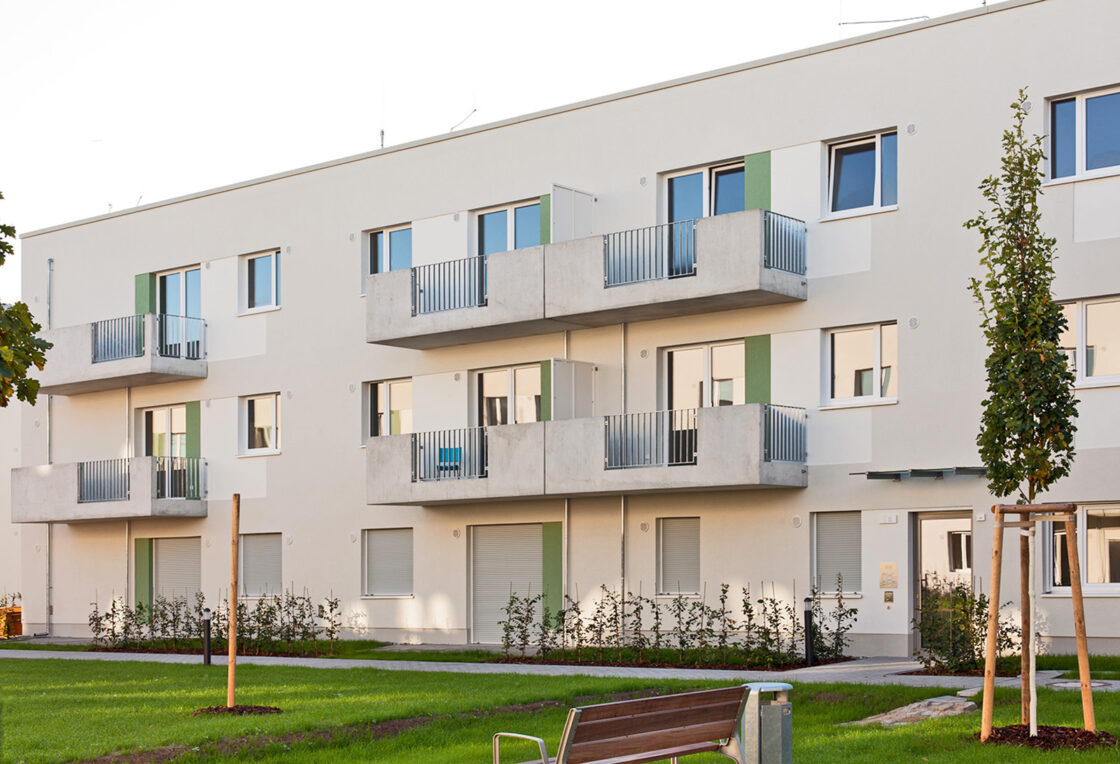
Ein klimaneutrales Zuhause für 128 Mietparteien entstand im März 2018 mit insgesamt 8.464 qm Wohnfläche in 5 dreigeschossigen Gebäuden um zwei Höfe.
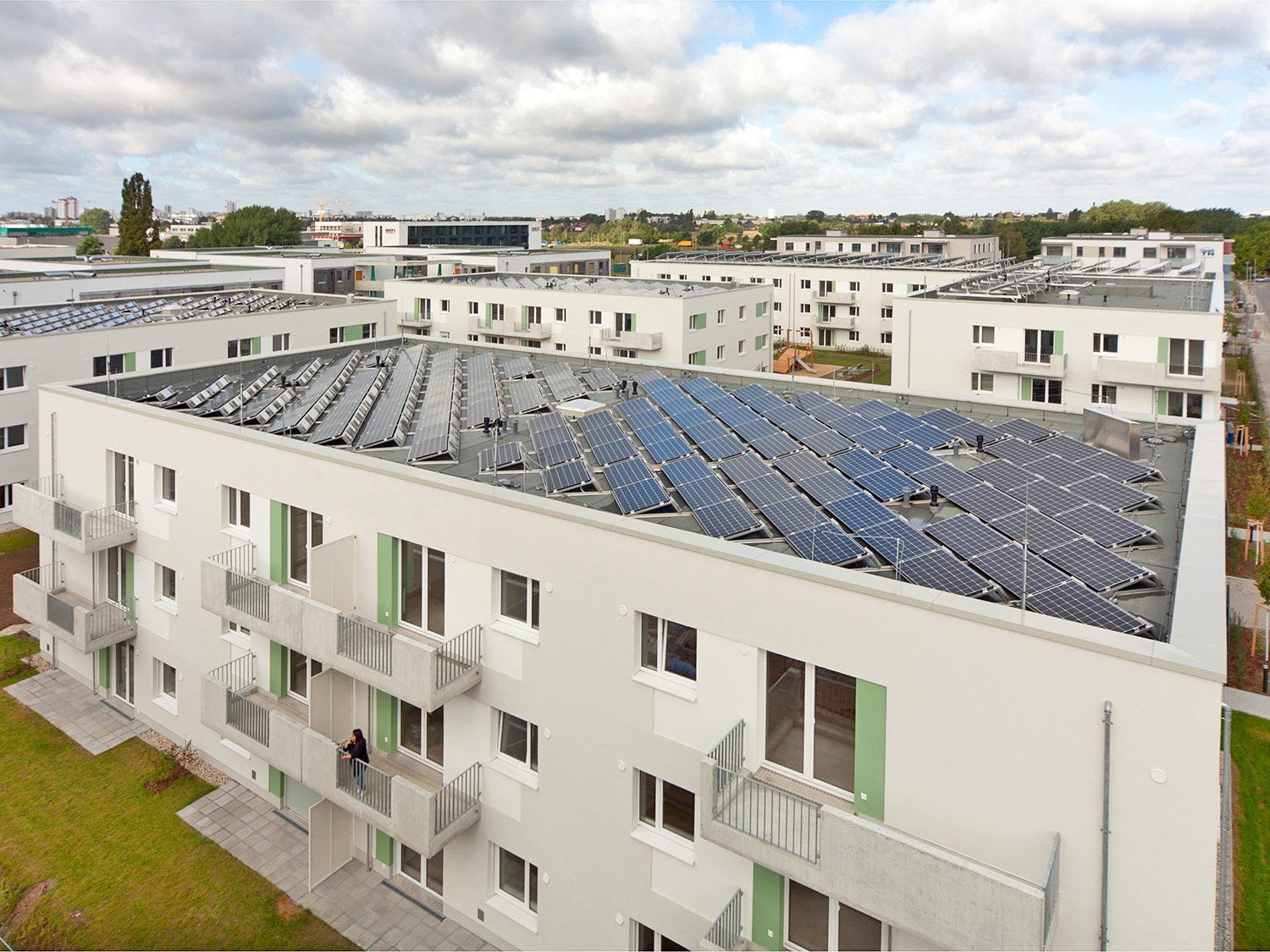
Das „Powerhouse“ verfügt über eine leistungsstarke Photovoltaik- und Solarthermieanlage. Über das Jahr gesehen werden vor Ort mehr Strom und Wärme produziert, als die Mieter benötigen. Zentraler Bestandteil des Plusenergie-Konzeptes ist die Einspeisung der überschüssigen Strom und Wärmeerträge (vor allem während der Sommermonate) ins öffentliche Stromnetz bzw. Fernwärmenetz der lokalen Blockheizkraftwerks-Träger und Betreibergesellschaft mbH (BTB). Der Bau eines eigenen Speichersystems konnte dabei eingespart werden und das Potenzial des vorhandenen Netzes genutzt werden.
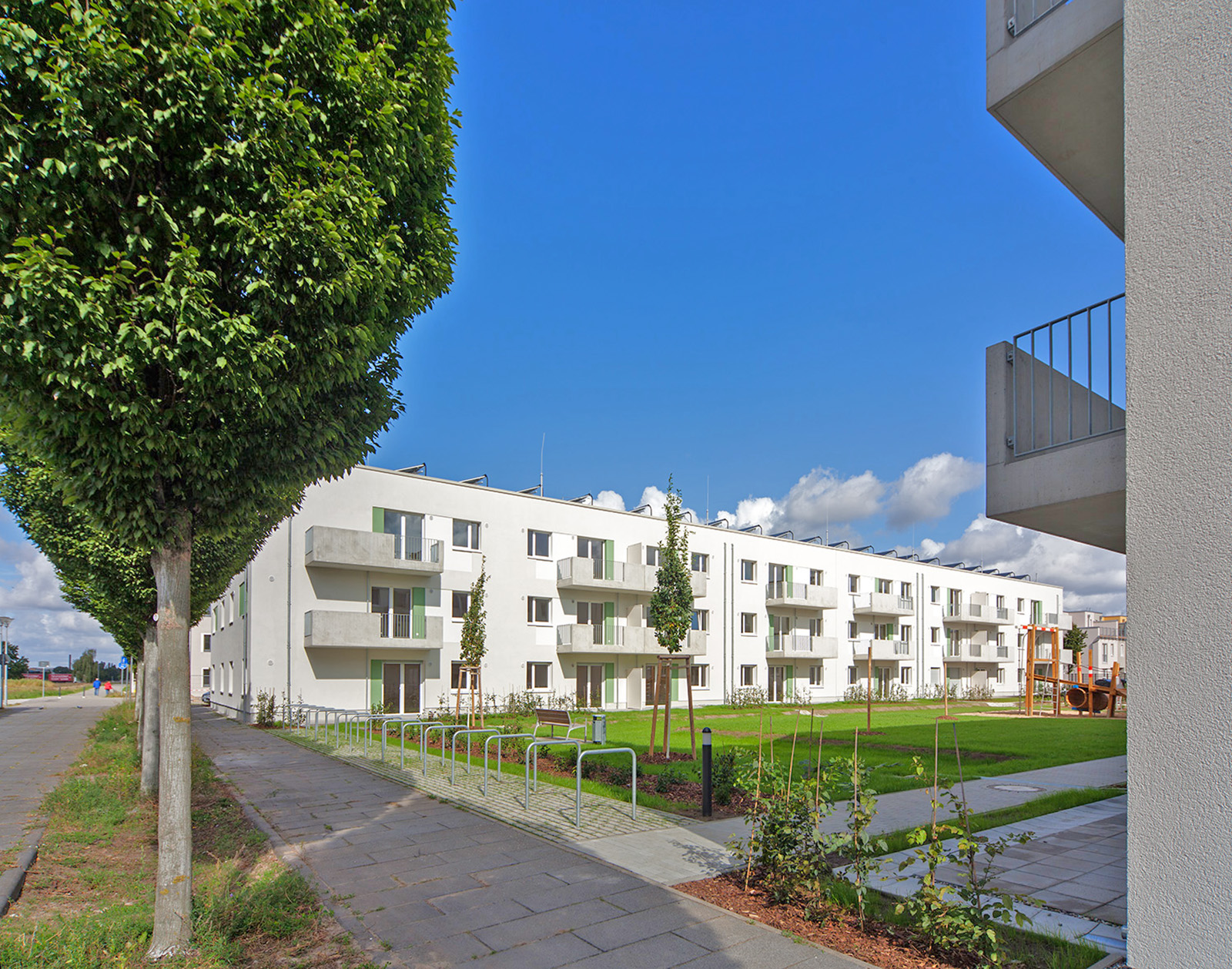
Das „Powerhouse” wird dank seiner hocheffizienten Gebäudehülle über einen sehr geringen Wärmebedarf verfügen. Dazu trägt auch die moderne Lüftungsanlage bei, die rund 80 Prozent der Wärmeenergie aus der verbrauchten Luft zurückgewinnen kann. Zudem werden dezentrale Wohnungsstationen eingesetzt, um die Wohnungen mit Warmwasser zu versorgen. Die dezentrale Trinkwasserstationen verringern Wärmeverluste, die sonst bei der Erhitzung des Warmwassers zur Legionellenbekämpfung anfallen würden. Im Vergleich mit einer zentralen Warmwasserversorgung kann darüber der Energiebedarf deutlich gesenkt werden.
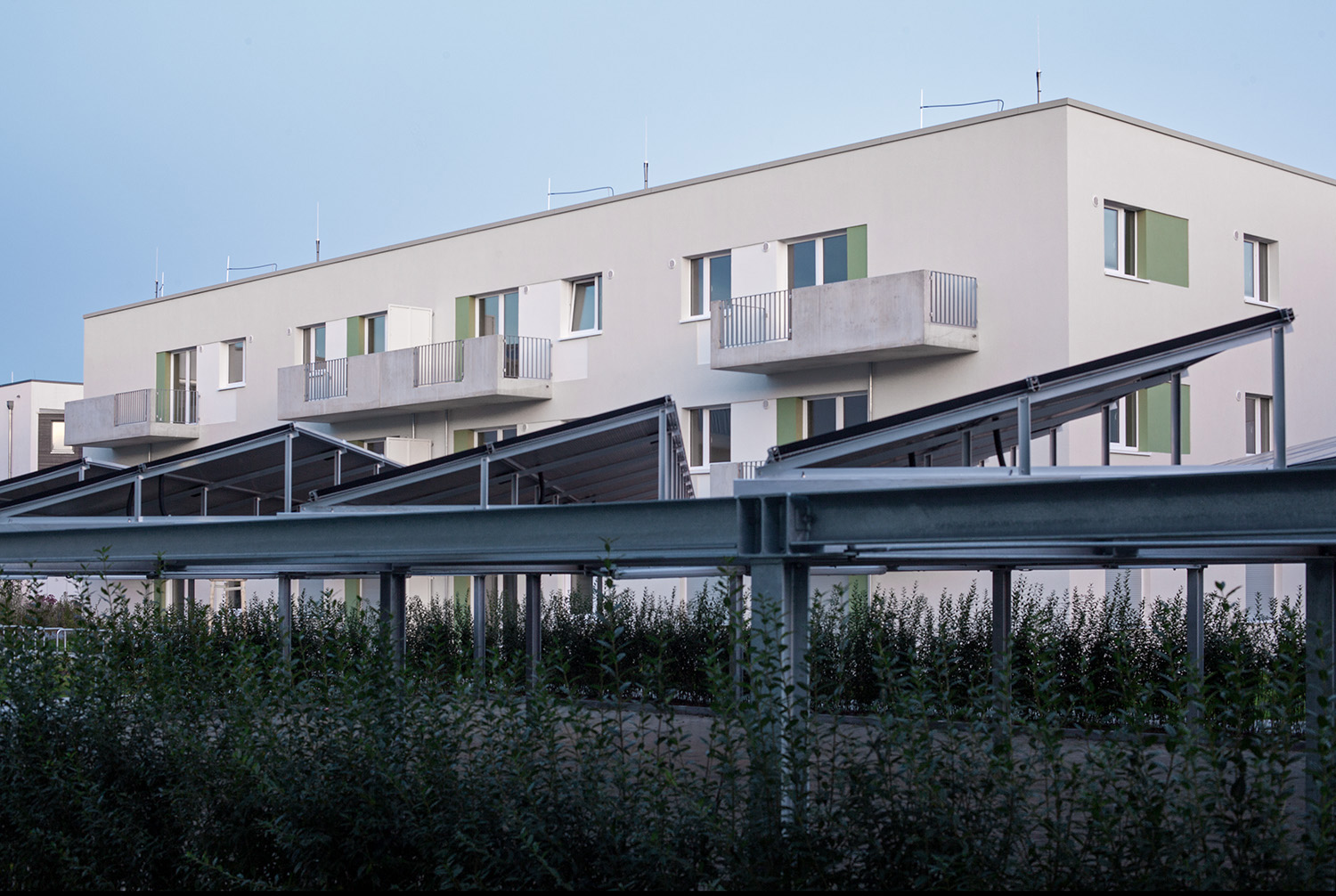
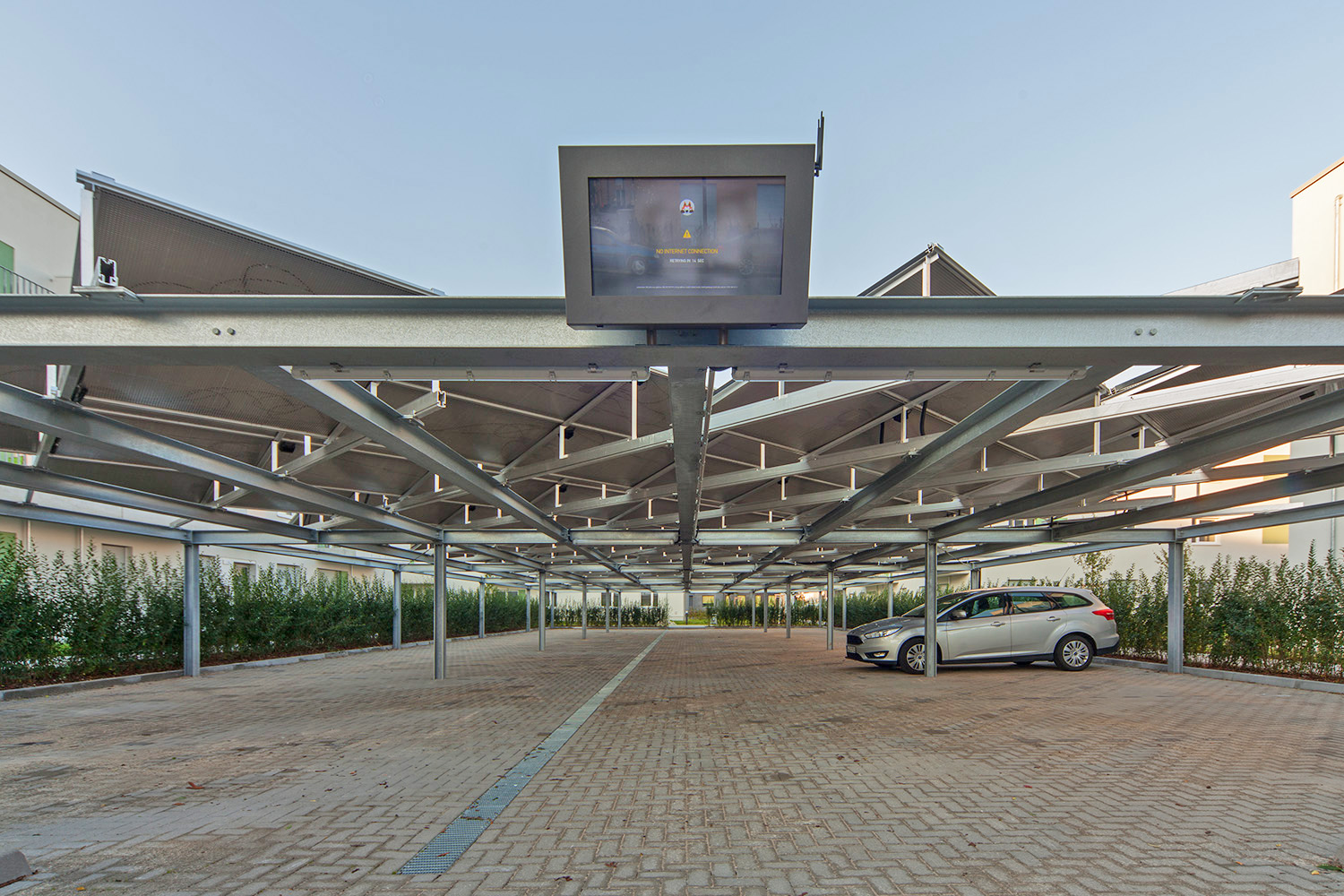
Auf den Dächern wurden PV- und Solarthermiemodule installiert sowie über den 28 oberirdische PKW-Stellplätze, zusätzliche Photovoltaikanlagen installiert. Ein Mieterstrommodell wurde für die Mieter ermöglicht. Der Stromüberschuß wird ins öffentliche Netz eingespeist. Bilanziell wird gar kein CO₂ freigesetzt, die Einsparung liegt bei 100%.
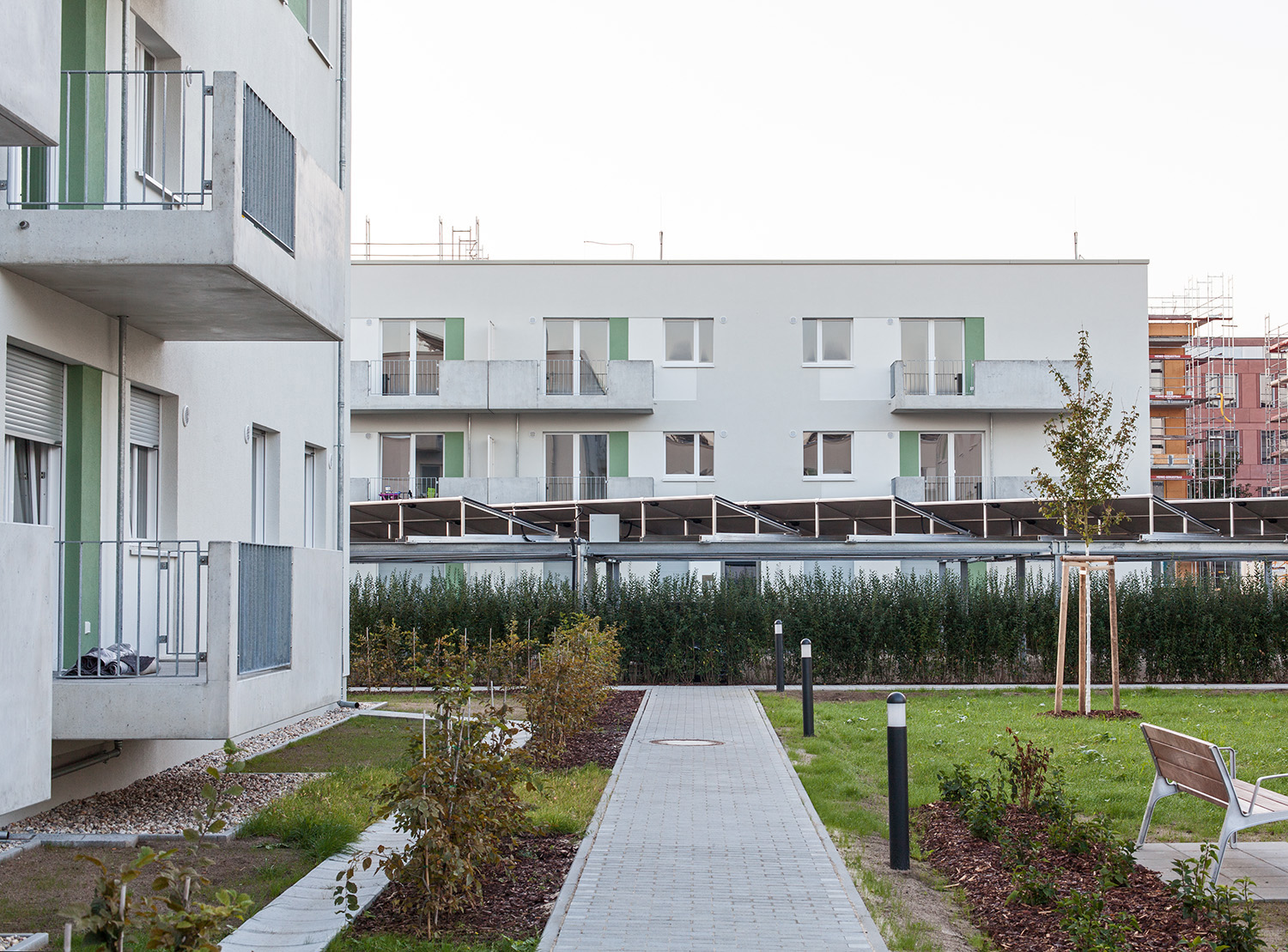
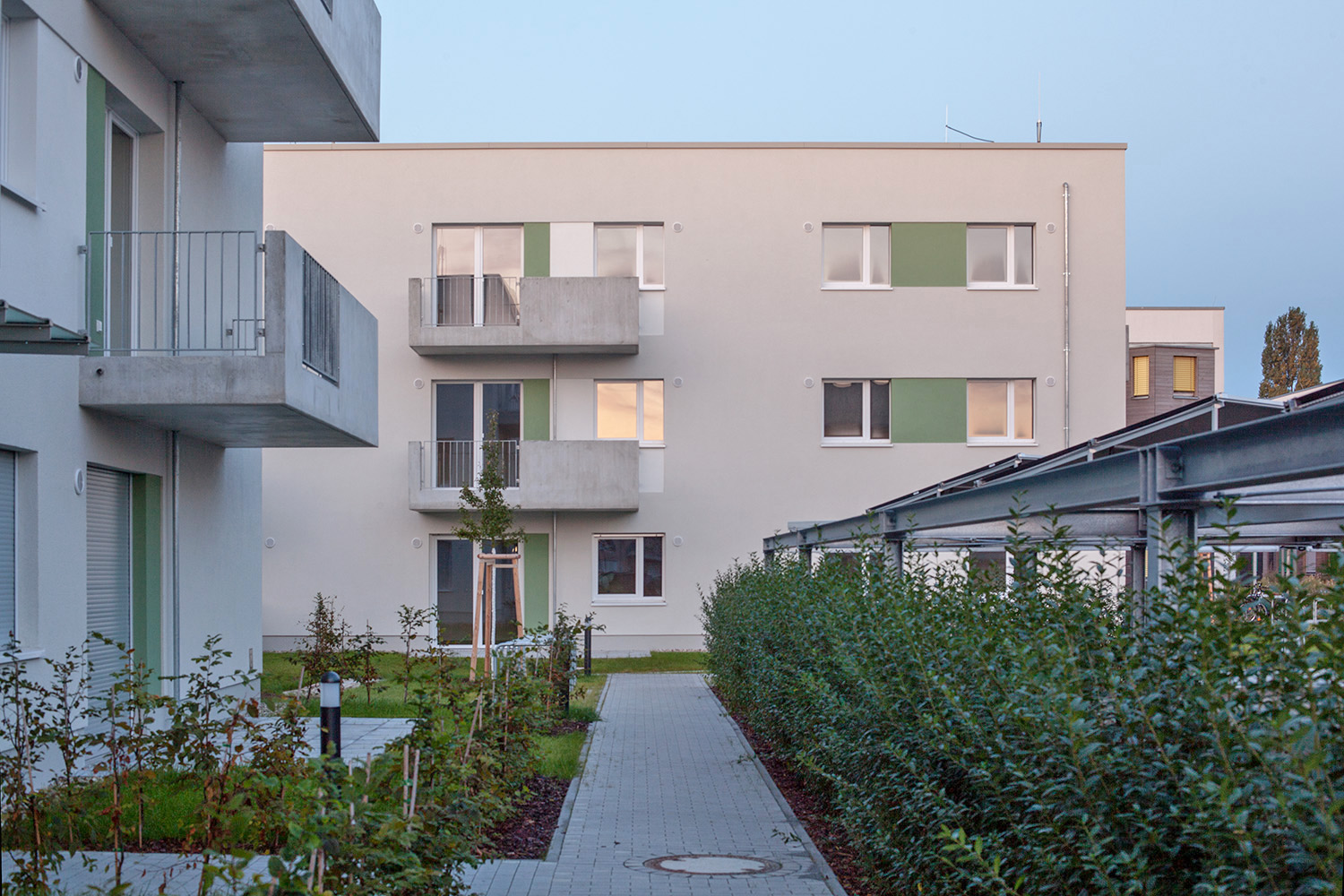
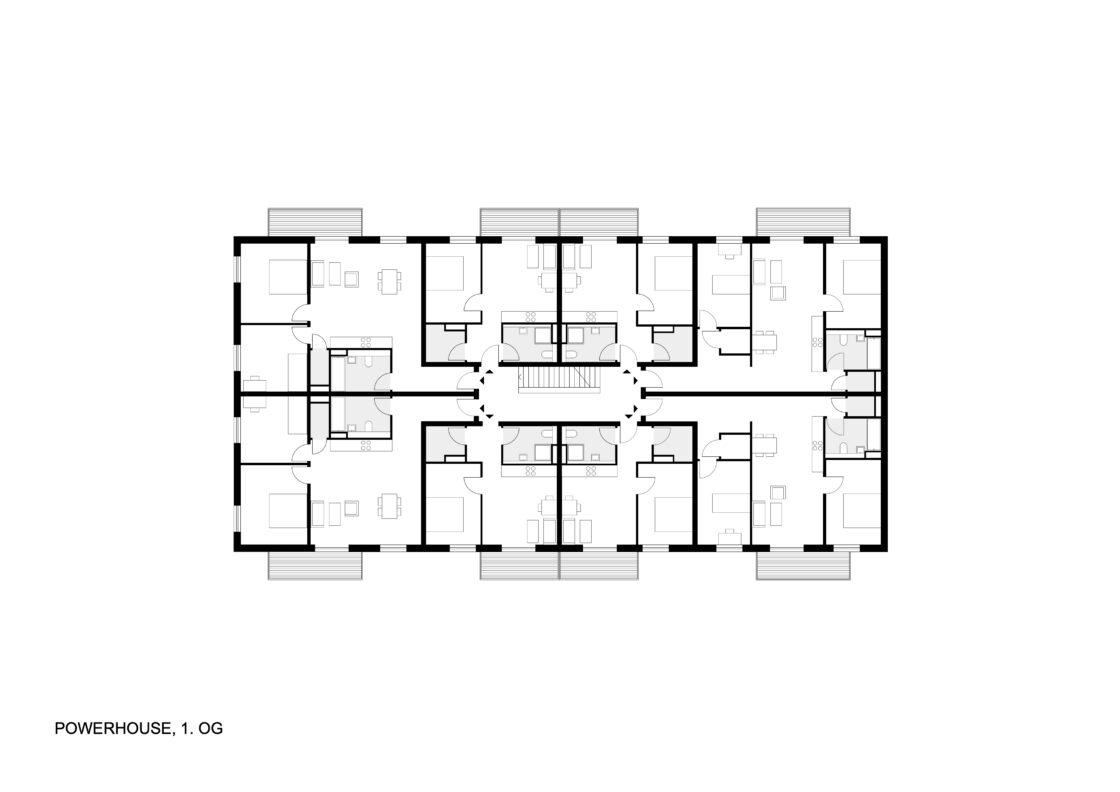
A carbon-neutral home for 128 tenants was built in March 2018 with a total of 8,464 m2 living space in five, three-story buildings around two courtyards.
The ‘Powerhouse’ has a high-performance photovoltaic and solar thermal system. Over the course of the year, more electricity and heat are produced on site than the tenants need. A central component of the PlusEnergy concept is the feeding of this surplus electricity and heat into the public power grid and district heating network of the local operating company (BTB), especially during the summer months. This meant a separate storage system was not required and the potential of the existing grid could be utilised.
Thanks to its highly efficient building envelope, the ‘Powerhouse’ has very low heating requirements. The modern MVHR system, which can recover around 80 percent of heat energy from the stale air, also contributes the efficiency of the building. Additionally, decentralised stations located in each apartment are used to supply hot water. The drinking water supply is also decentralised to reduce the heat loss that would otherwise occur when heating the water to eliminate legionella. Compared to a central hot water supply, this approach significantly reduces energy requirements.
Photovoltaic and solar thermal panels were installed on the roofs and additional photovoltaic systems were installed above the 28 parking spaces. A tenant electricity model was made possible for the tenants. The surplus electricity generated is also fed into the public grid. Overall the project is CO₂ neutral.