
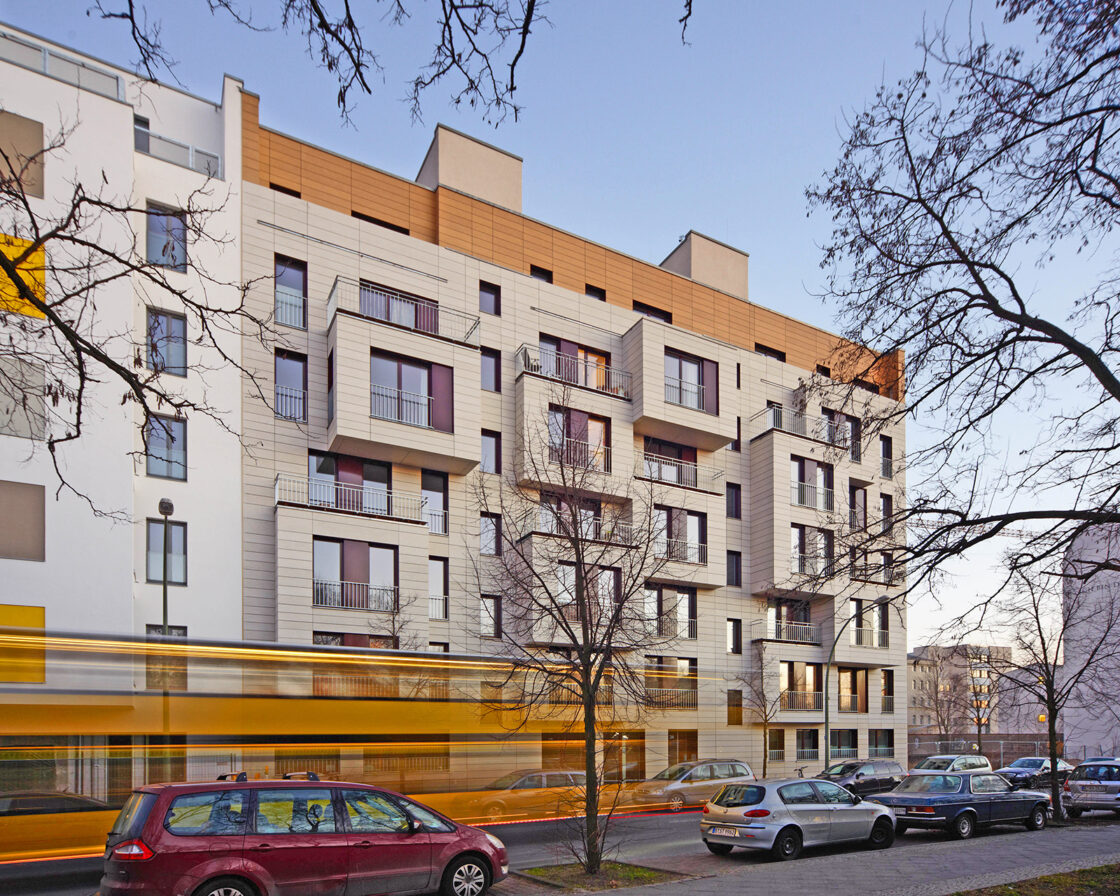
NULLEMISSIONSHAUS
Boyenstraße Berlin-Mitte
In der Boyenstraße wurde mit einer Baugruppe das erste 7-geschossige Nullemissionswohnhaus im 2013 fertig gestellt. Mit seinen 21 Wohneinheiten und Wohnungsgrößen von 60-140 m2 demonstriert das Projekt am Rande des Berliner Regierungsviertels wie sich die Energiewende im Wohnungsbau verwirklichen lässt: Das Gebäude erzeugt praktisch kein CO2 und weist eine positive Primärenergiebilanz auf.
Grund dafür ist ein effizienter Mix aus Energieeinsparung und Energiegewinnung, u. a. durch Photovoltaik und ein erdgasbetriebenes Blockheizkraftwerk. Intelligente Lüftungssysteme mit Wärmerückgewinnung und die Bauweise tun ein Übriges.
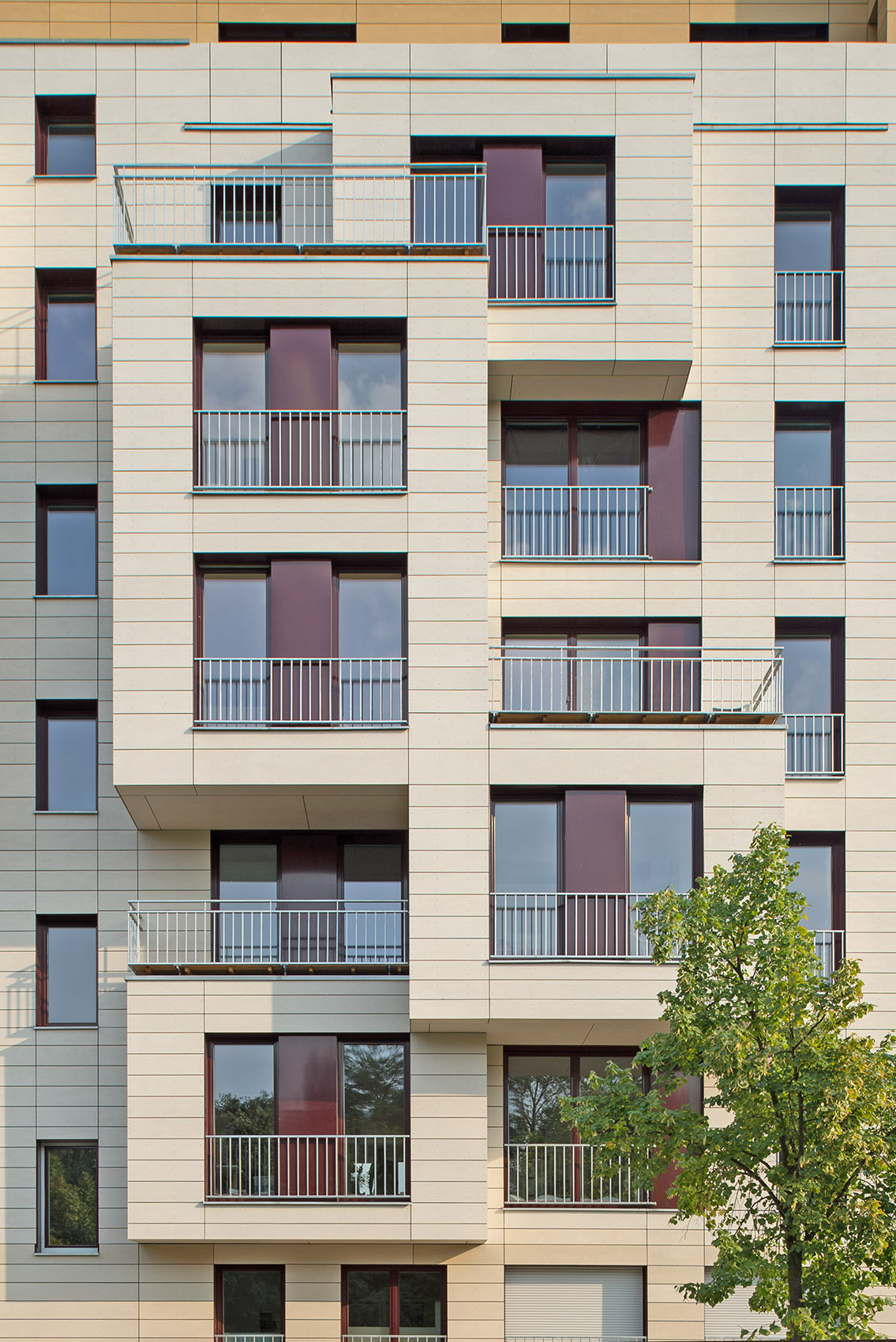
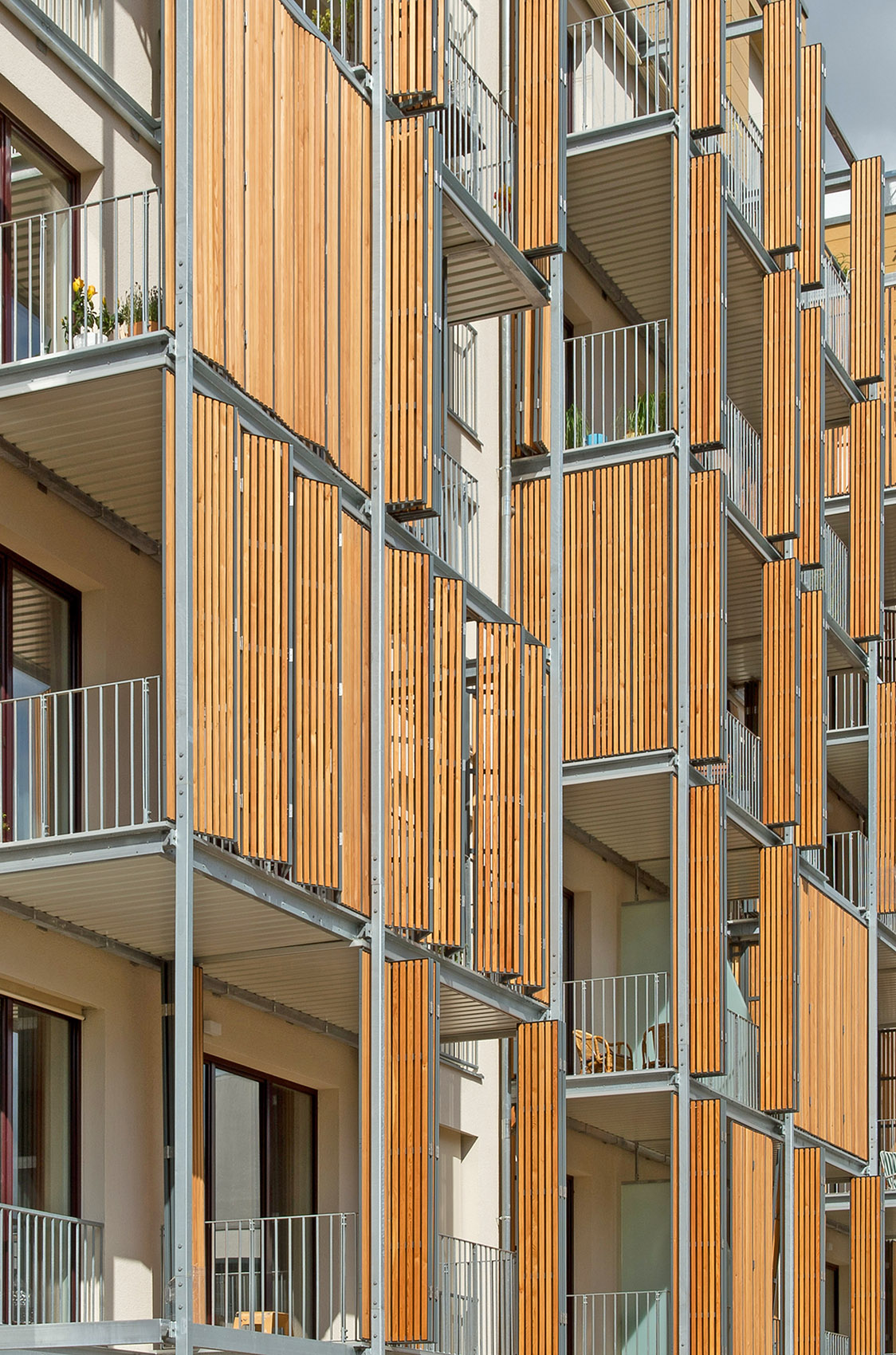
Das Wohnhaus wurde als KfW Effizienzhaus 40 gefördert und durch das Passivhaus Institut Darmstadt zertifiziert. Das Gebäude wurde in Mischbauweise errichtet, bestehend aus einem massiven aussteifenden Kern und einem Schottenbau aus Stahlbeton. Die Fassaden bestehen aus vorgefertigten Holzrahmenelementen mit eingeblasenen Zellulosefasern als Dämmstoff. Die Straßenfassade erhält vorgehängte Faserzementplatten; die Gartenseite wird verputzt und erhält eine Balkonanlage mit Verschattungselementen aus Lärchenholz für den sommerlichen Wärmeschutz.
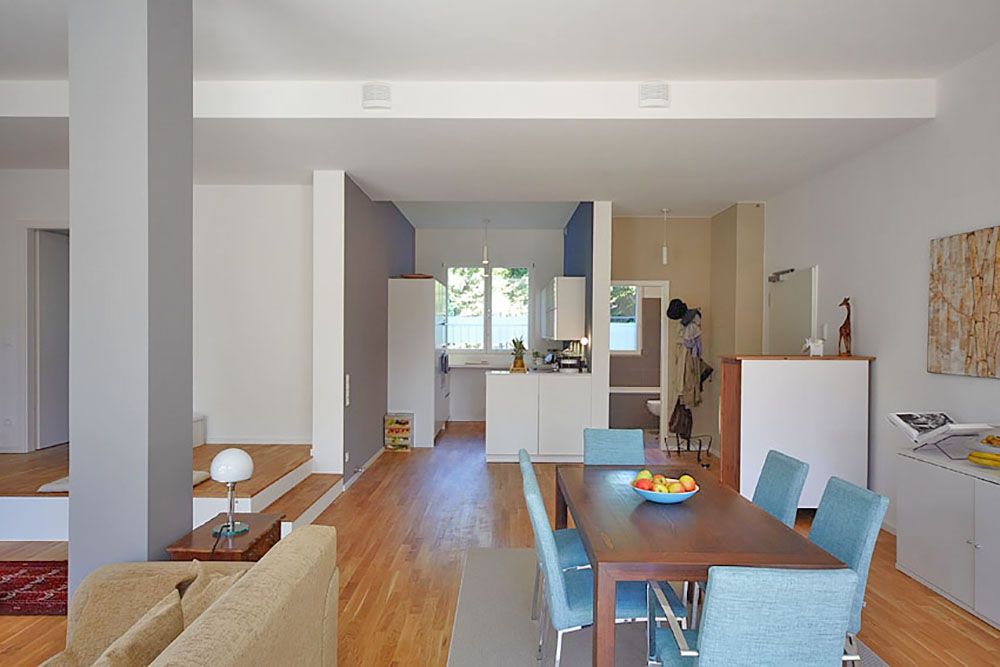
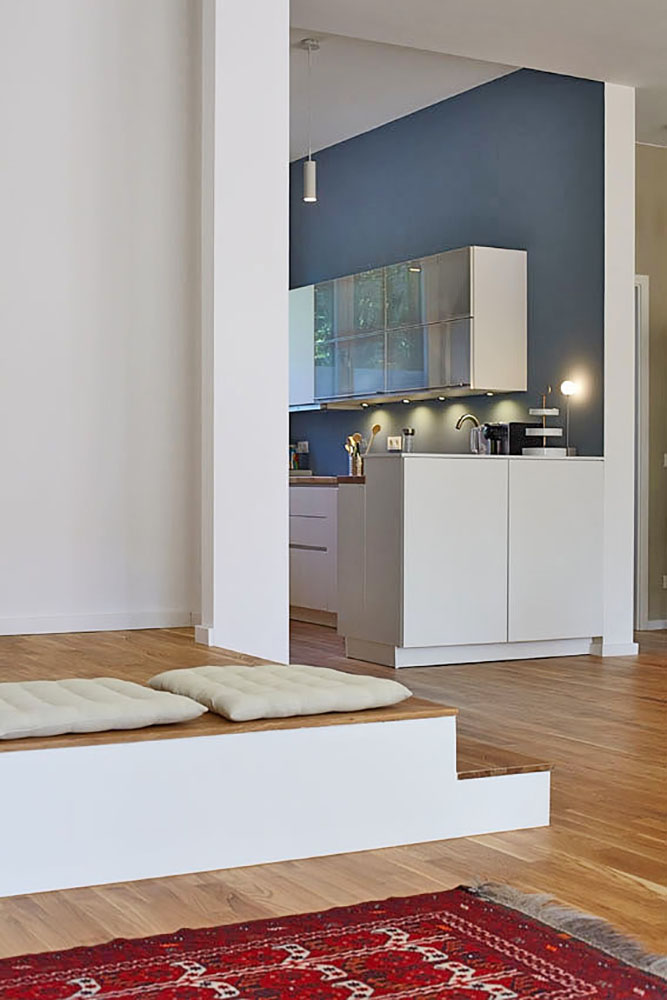
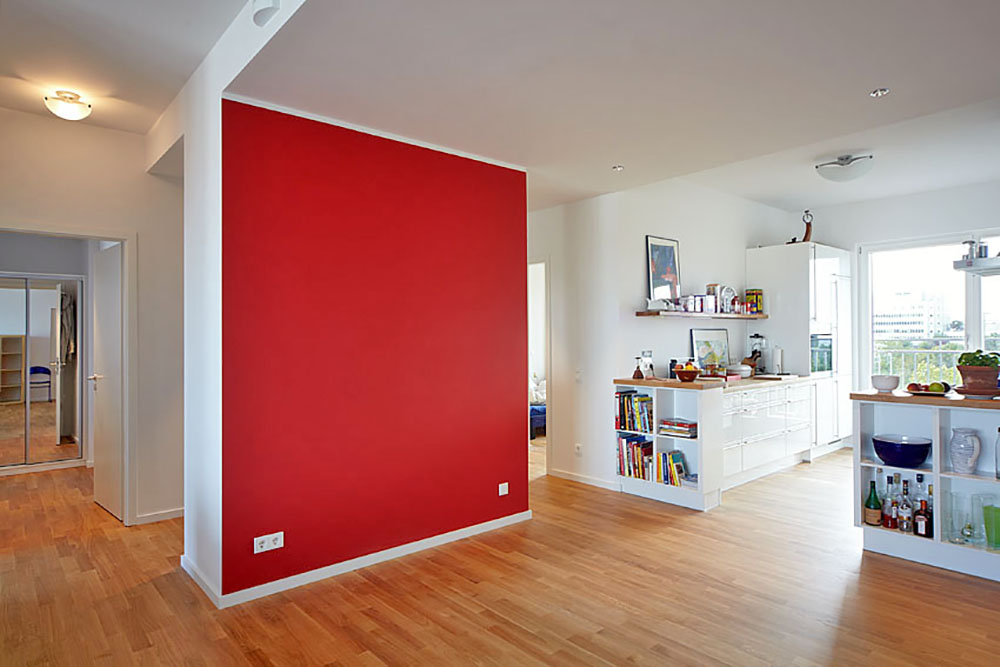
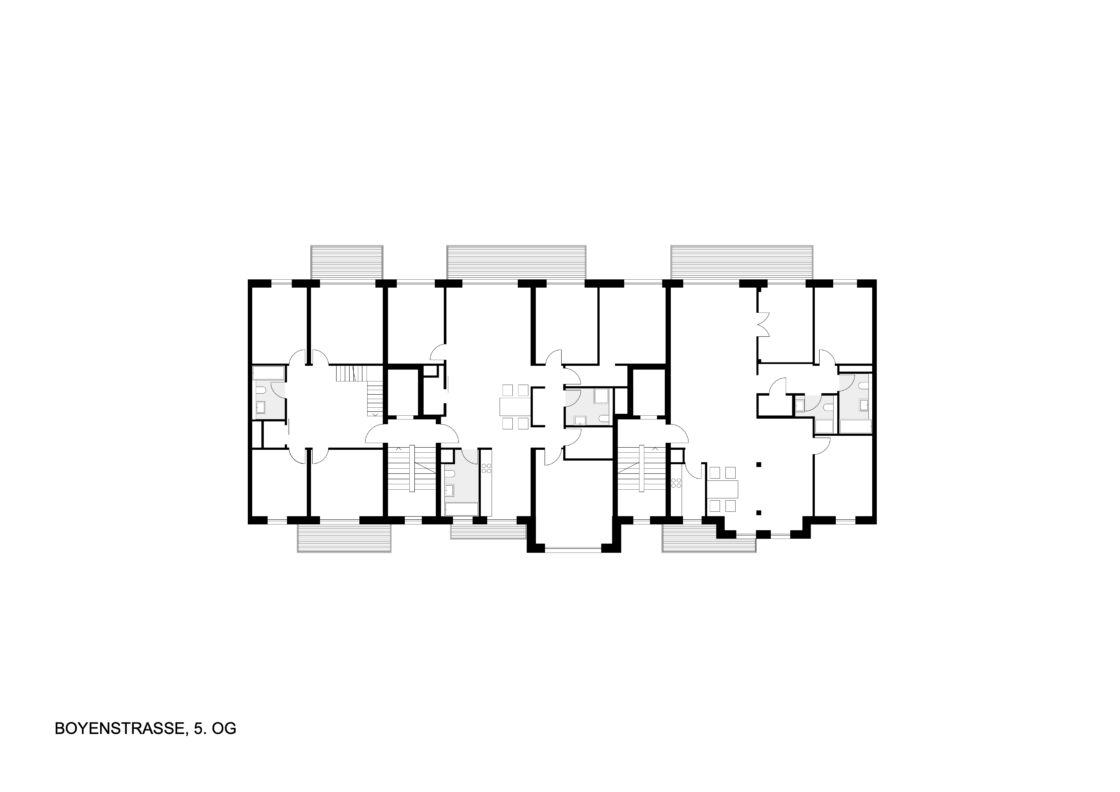
Die Wohnungsgrundrisse wurden in einem partizipativen Planungsprozess entwickelt und individuell geplant. Neben dem barrierefreien Zugang zu Gemeinschaftsräumen, Garten und gemeinschaftlicher Dachterrasse sind einzelne Wohnungen barrierefrei ausgebaut.
Das Gründach sorgt für eine reduzierte Regenwasserabgabe und ein gesundes Stadtklima. Das Regenwasser wird in einem Sickerschacht im Garten geleitet und eine Grauwasseranlage wurde vorinstalliert. Der versiegelte Flächenanteil wurde im Garten minimiert.

The first seven-storey, zero-emission residential building was completed in Boyenstrasse in 2013 together with a building cooperative. With its 21 residential units and apartments ranging from 60 to 140 m2, the project on the edge of Berlin’s government district demonstrates how the energy revolution can be realised in residential construction. The building produces virtually no CO₂ and has a positive primary energy balance.
This is achieved through an efficient combination of energy-saving and energy-generation measures, including photovoltaics and a natural gas-powered combined heat and power plant. Intelligent ventilation systems with heat recovery and the construction method do the rest.
The residential building was subsidized as a KfW Efficient House 40 and certified by the Passive House Institute in Darmstadt. It was constructed using a hybrid method consisting of a solid structural core and reinforced concrete structural walls. The facades were built using prefabricated timber frame elements with blown-in cellulose insulation. The street-facing facade is clad with fibre cement panels, while the garden-facing side is plastered and features a balcony with larch shading elements to provide thermal protection during the summer months.
The apartment layouts were developed through a participatory planning process and planned individually. In addition to barrier-free access to common areas, the garden and communal roof terrace, individual apartments are also barrier-free.
The green roof reduces rainwater run-off and promotes a healthy urban climate. Rainwater is channelled into a soakaway in the garden, and a grey water system has been pre-installed. The amount of impermeable surface area in the garden has been minimised to allow natural drainage of rainwater.