
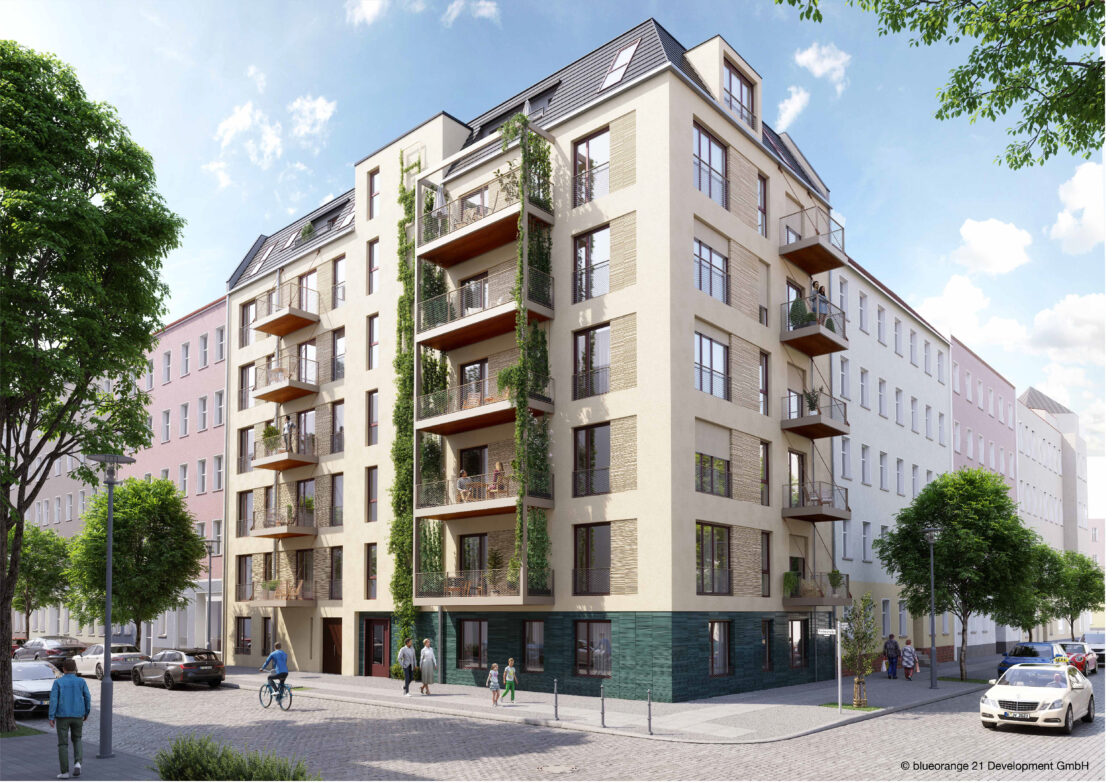
NACHHALTIGES WOHNGEBÄUDE IM BERLINER KASKELKIEZ
Kaskelstraße 36, Berlin
Im Berliner Kaskelkiez entsteht ein zukunftweisendes nachhaltiges Wohngebäude. Das im Jahr 2023 erstmal aufgelegte Förderprogramm der „KfW Klimafreundlicher Neubau mit Qualitätssiegel Nachhaltiges Gebäude“ QNG definiert zusammen mit dem DGNB Zertifikat einen neuen Maßstab im Nachhaltigen Bauen.
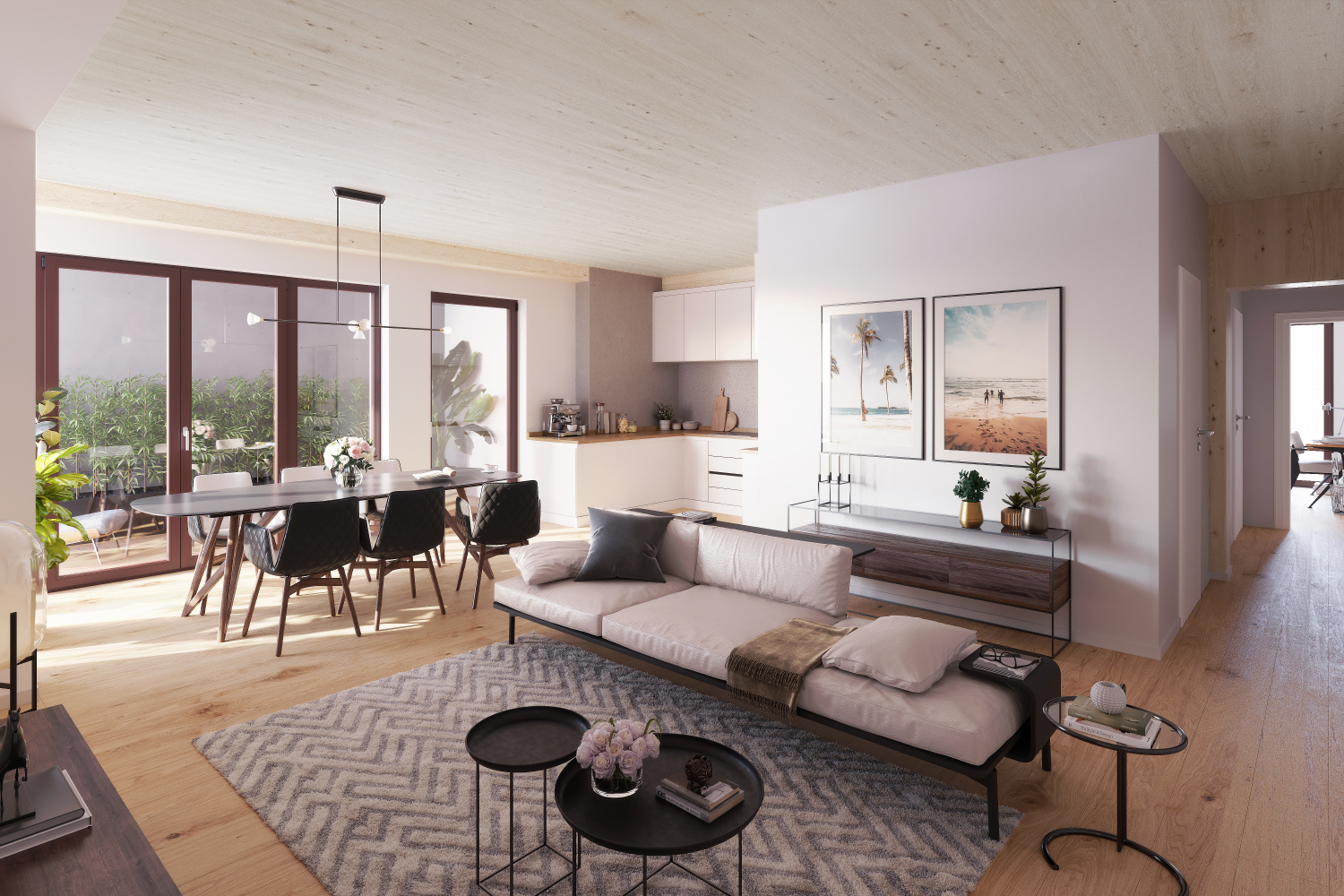
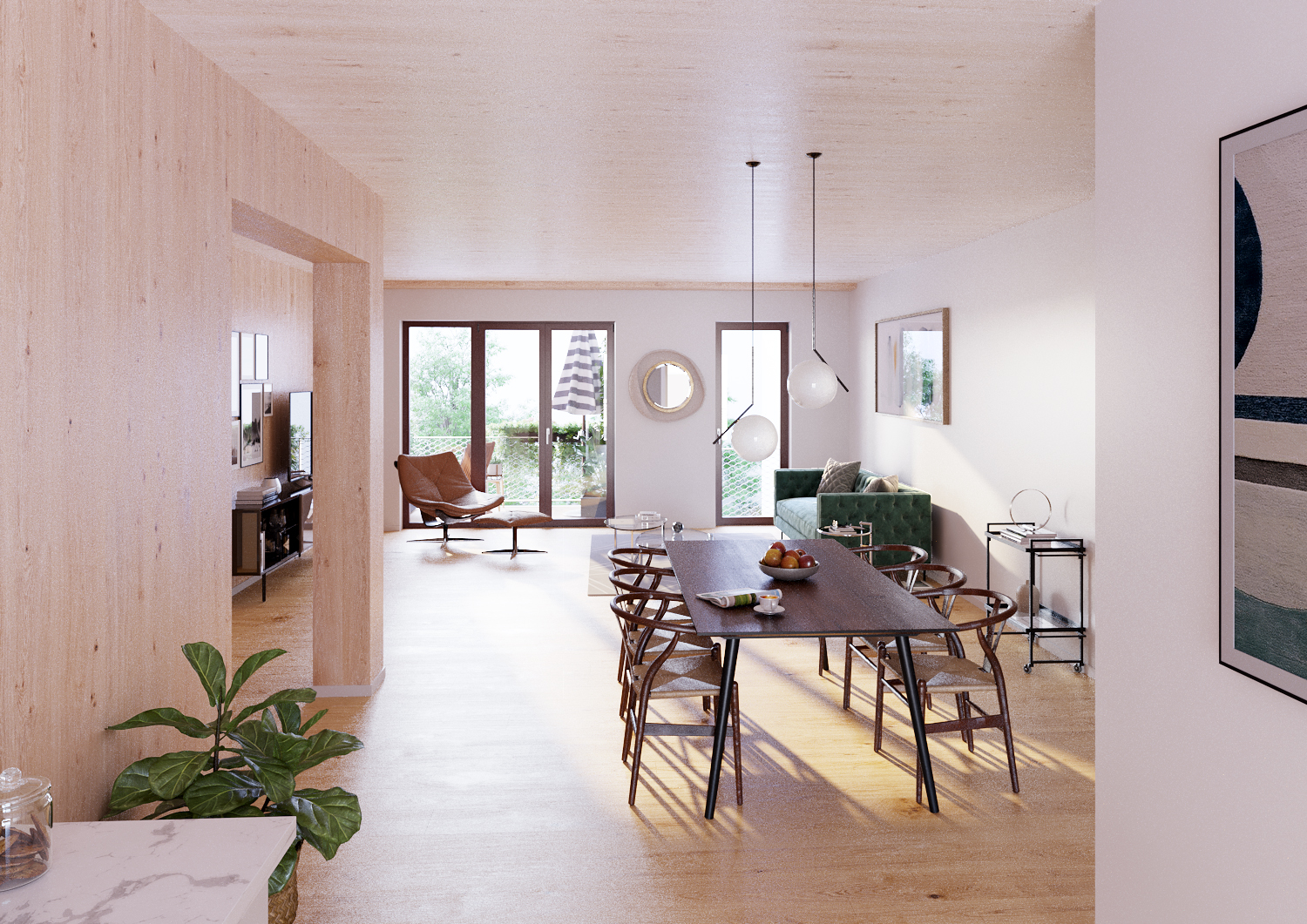
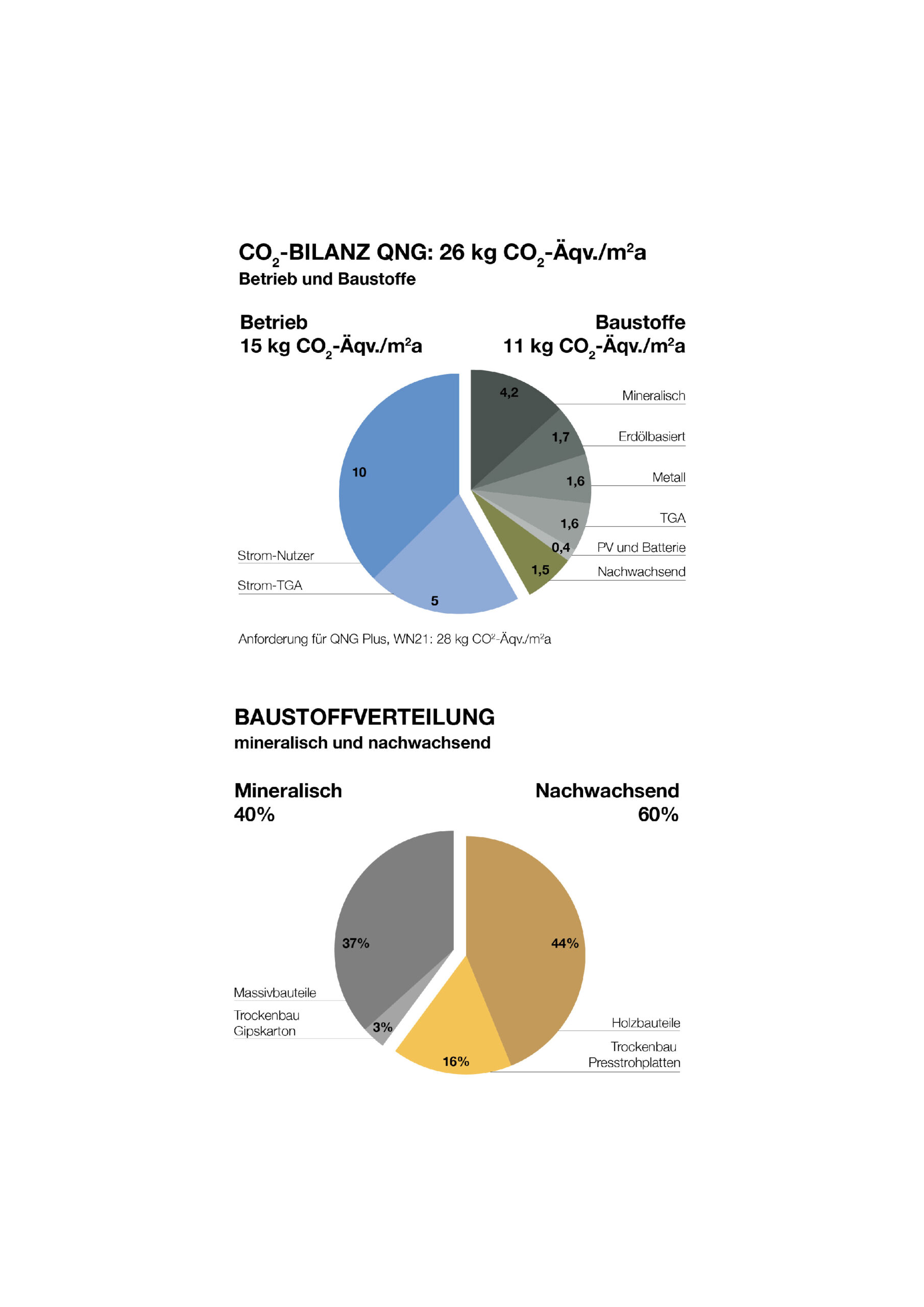
Das 7-geschossige Gebäude entsteht als Eckbebauung in einer Baulücke mit 1.800m2 Wohnfläche und 21 Wohnungen. In dem Holzhaus sind lediglich Kellergeschoss, Treppenhaus und Brandwände aus Beton errichtet. Massive Holzwände und Holzdecken bilden zusammen mit den Fassaden als vorgefertigten Holztafelbauelementen den Holzbau. Alle Holzteile werden sichtbar verbaut. Der so erreichte Holzanteil der Gesamtkonstruktion beträgt 60%.
Mit aktuell einem Grenzwert von 24 kg CO2äqu./ m2 NRF gibt der Grenzwert an wieviel CO2 in Konstruktion und durch den Betrieb des Hauses im Lebenszyklus emittiert werden darf. Dies entspricht der Erkenntnis, dass die im Baustoff gebundene Energie einen großen Anteil der Emissionen des Bauwesens ausmacht. Zusätzlich werden mit dem QNG-Siegel die Holzherkunft, die Zugänglichkeit zum Haus und die Barrierefreiheit innerhalb der Wohnung im Sinne des Universal Design bewertet.
Für das Haus ist der KfW 40 Standard vorgesehen. Außenwände mit einem U-Wert von 0,15 W/m2k als Holztafelbauelemente leisten dazu einen wesentlichen Beitrag. Dach und Bodenplatte sind ebenfalls hochgedämmt.
Die Wärmeversorgung des Hauses erfolgt über rückgewonnenen Wärme der Abluft und aus Erdsonden. Es kommen Wärmepumpen zum Einsatz. Eine PV Anlage auf dem Dach hat mit berechneter Strommenge von 16.000 kWh einen Anteil des im Haus genutzten Stromes.
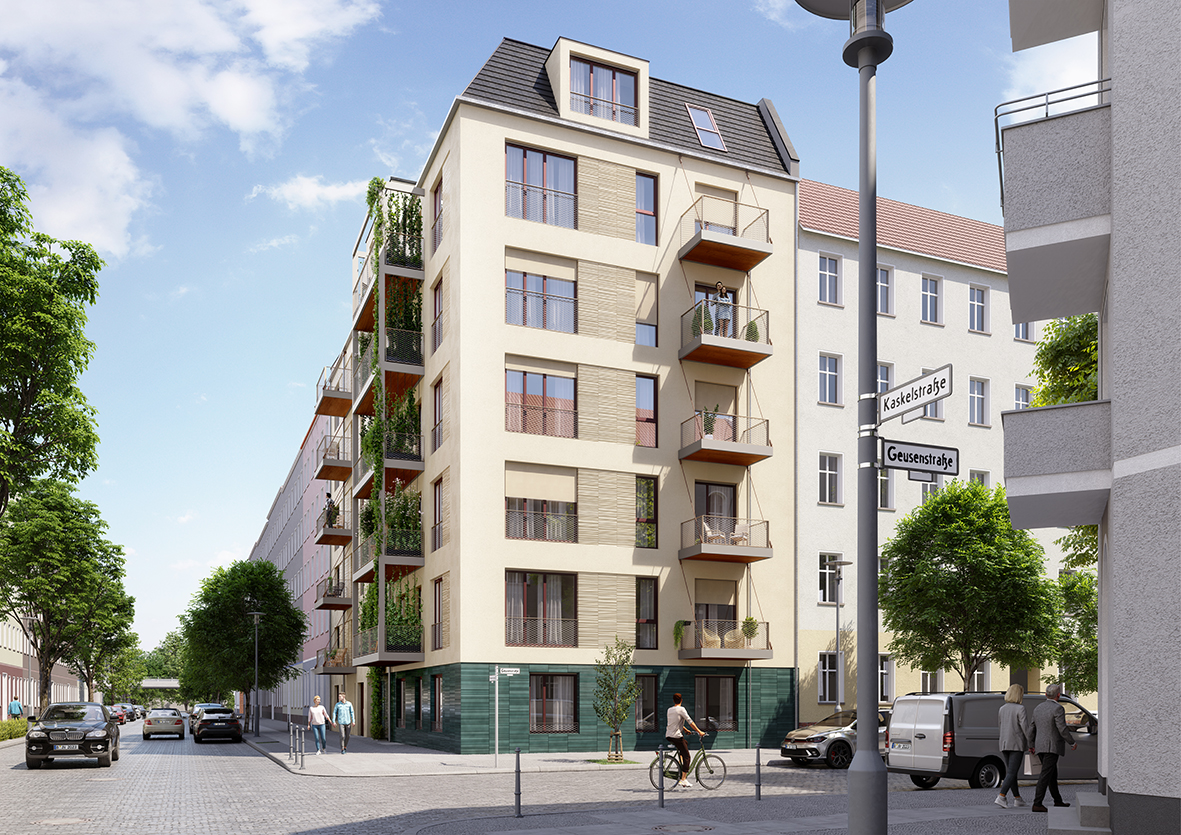
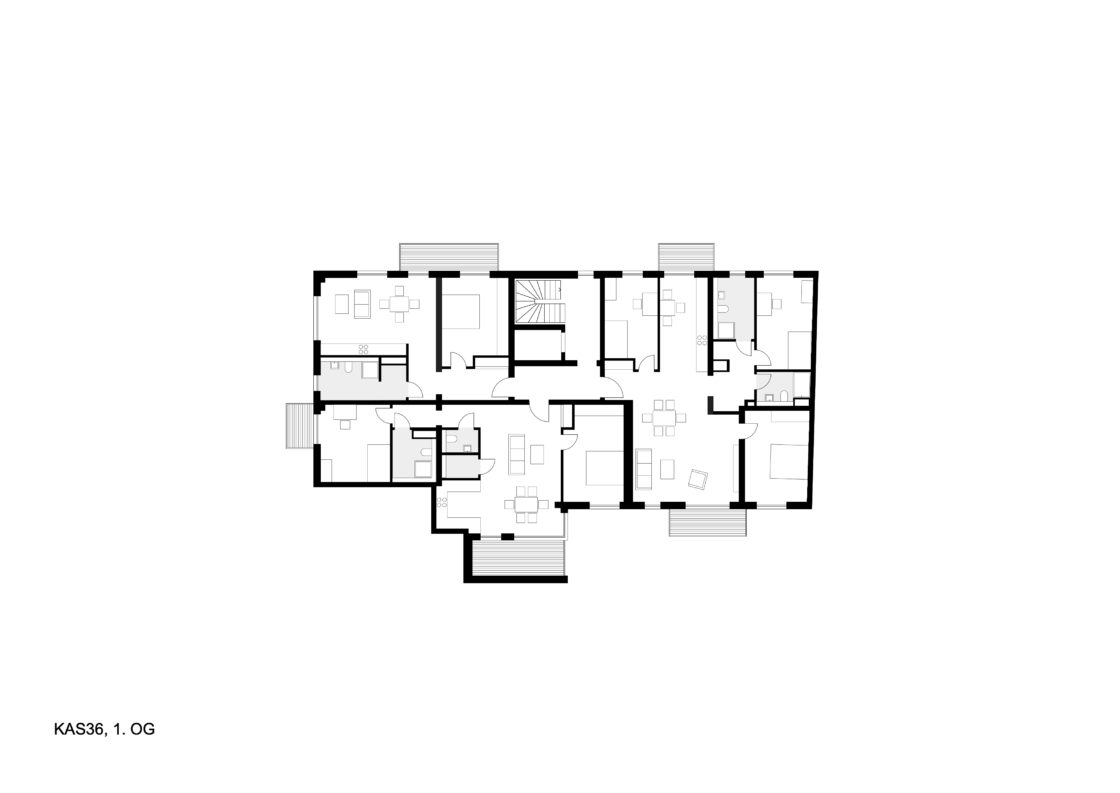
A pioneering sustainable residential building is currently under construction in Berlin’s Kaskelkiez district. Launched in 2023, the KfW Climate-Friendly New Construction with Sustainable Building Quality Seal (QNG), in combination with the DGNB Certificate, establishes a new benchmark for sustainable building in Germany. This seven-story corner building, occupying an urban infill site, will deliver 1,800 m² of residential space across 21 apartments.
Designed as a predominantly timber structure, only the basement, stairwell, and firewalls are constructed from concrete. Solid timber walls and ceilings, combined with prefabricated timber panel facade elements, form the main building envelope. All timber components remain exposed, resulting in a structural timber content of 60%.
The QNG framework sets a strict emissions limit of 24 kg CO₂ per m² of net floor area, over the building’s life cycle. This includes both embodied carbon and that emitted during the building’s use. This framework acknowledges the significant role of embodied energy in a building’s total environmental impact. In addition to carbon performance, the QNG certification assesses the origin of the timber used, the accessibility of the building, and the provision of fully barrier-free apartments in line with Universal Design principles.
The project is designed to meet the KfW Efficiency House 40 standard. High-performance timber panel exterior walls with a U-value of 0.15 W/m²K, together with highly insulated roof and ground slabs, significantly reduce energy demand. Heating is provided by a combination of heat recovery from stale air and geothermal boreholes, supported by heat pumps. A rooftop photovoltaic system will produce an estimated 16,000 kWh of electricity annually, supplying a share of the building’s on-site energy needs.
Bauherr: Blueorange Viktoriastadt GmbH
Wohneinheiten: 21
Geschosse: 7
Brutto-Grundfläche: 2.690 m²
Wohnfläche: 1.800 m²
Auszeichnung