
ERWEITERUNGSBAU MONTESSORISCHULE HUCKEPACK
Realisierungswettbewerb, Dresden
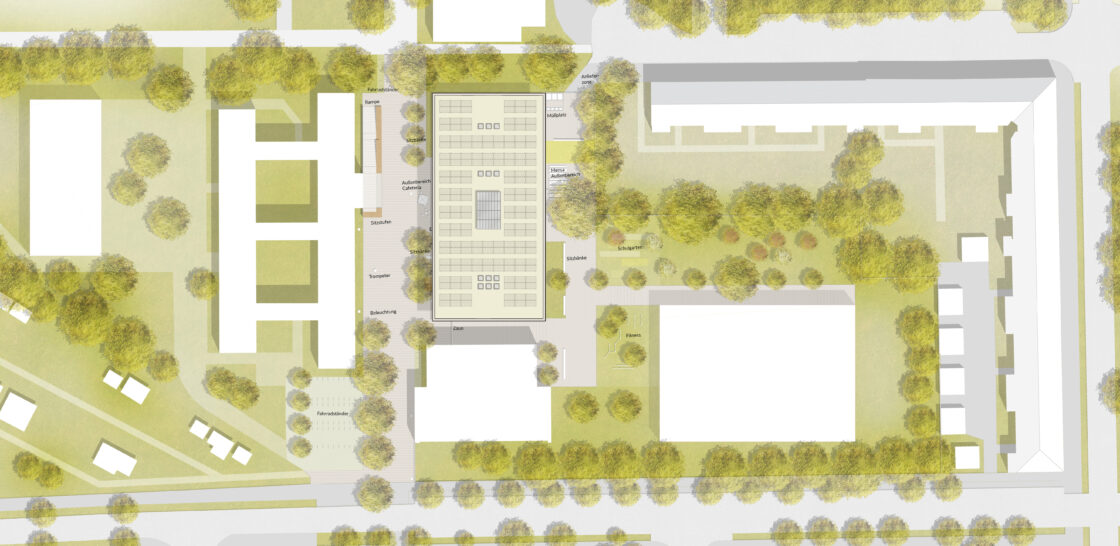
Im Herzen Striesens, zwischen Schandauer Straße und Prossener Straße entfaltet sich der neue Schulcampus der Freien Montessori Schule des Huckepack Vereins.
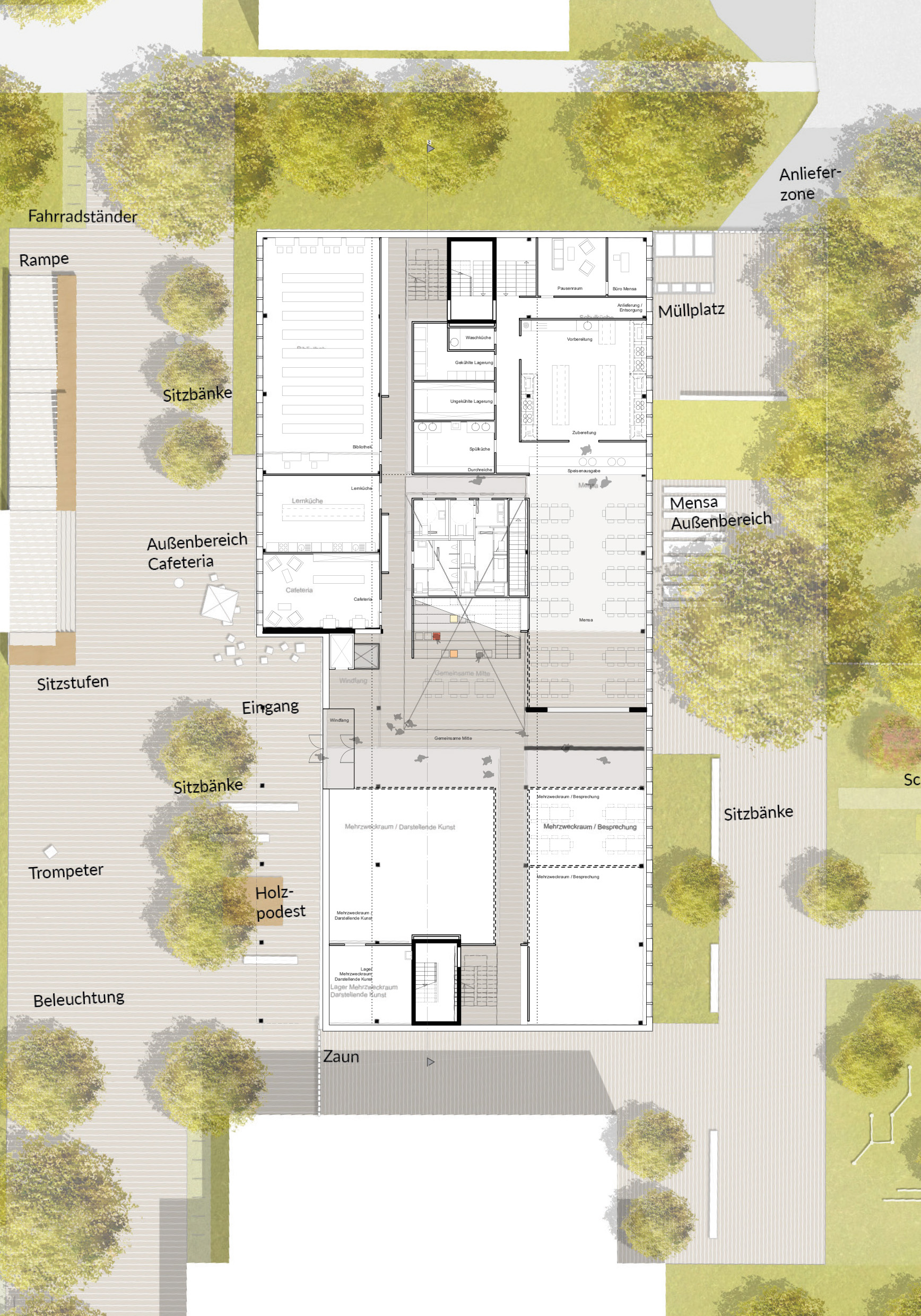
Der Fußweg zwischen Bestandsgebäude und dem Neubau wird durch den Einschnitt im Eingangsbereich des Neubaus platzartig erweitert. Vom Platz aus werden künftig beide Gebäude erschlossen. Auf der Ostseite entsteht ein Pausenhof. Hof und öffentlicher Platz werden durch die transparente, gemeinsame Mitte axial verbunden. Aus dieser sind alle gemeinschaftlichen Funktionen, wie z.B. die Bibliothek und das Schülercafe aus erreichbar. Betritt man den Eingang des Neubaus, so gelangt man in die neue Mitte der freien Montessori Schule. Diese erstreckt sich als Atrium durch alle Geschosse und ist zentraler Erschließungsraum des neuen Schulgebäudes.
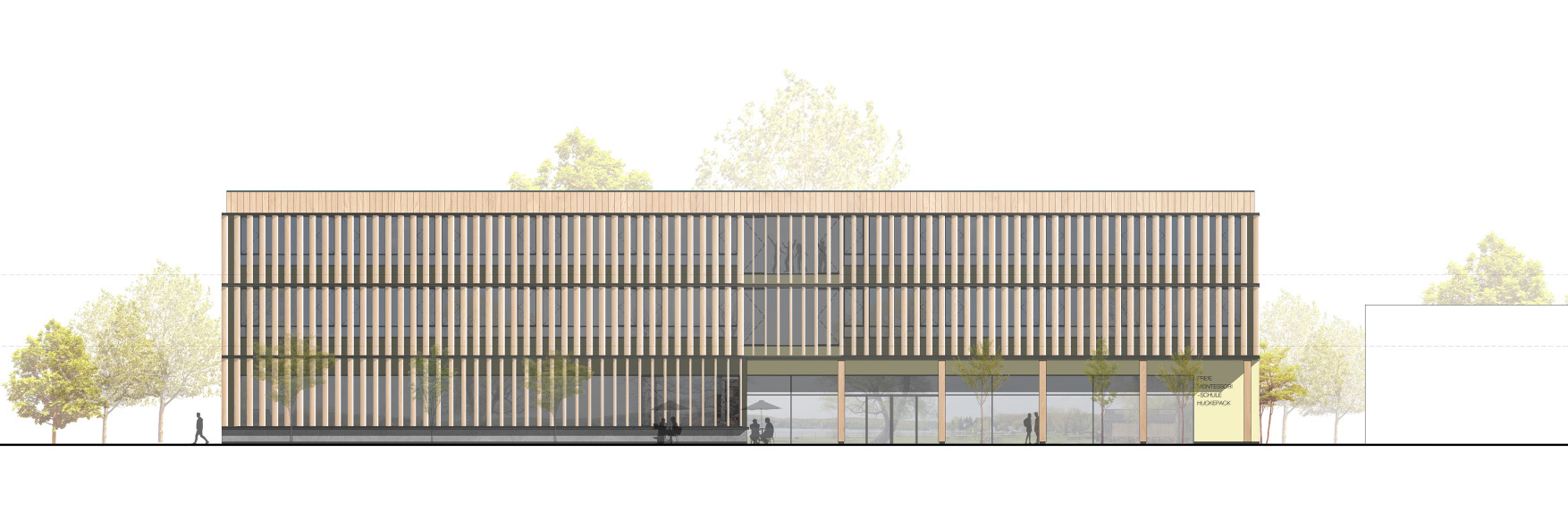
Das Gemeinschaftshaus wird als Mischbau mit Holzskelett, Holzbetonverbunddecken und massiven Treppenhäusern gebaut. Die Fassaden werden als vorgehängte Holztafelelemente montagefertig vorfabriziert. Zusammen mit einer hochdämmenden Zellulosedämmung bietet sich hier nicht nur eine effiziente Einsparung von Energie im Betrieb, sondern auch in der Herstellung.
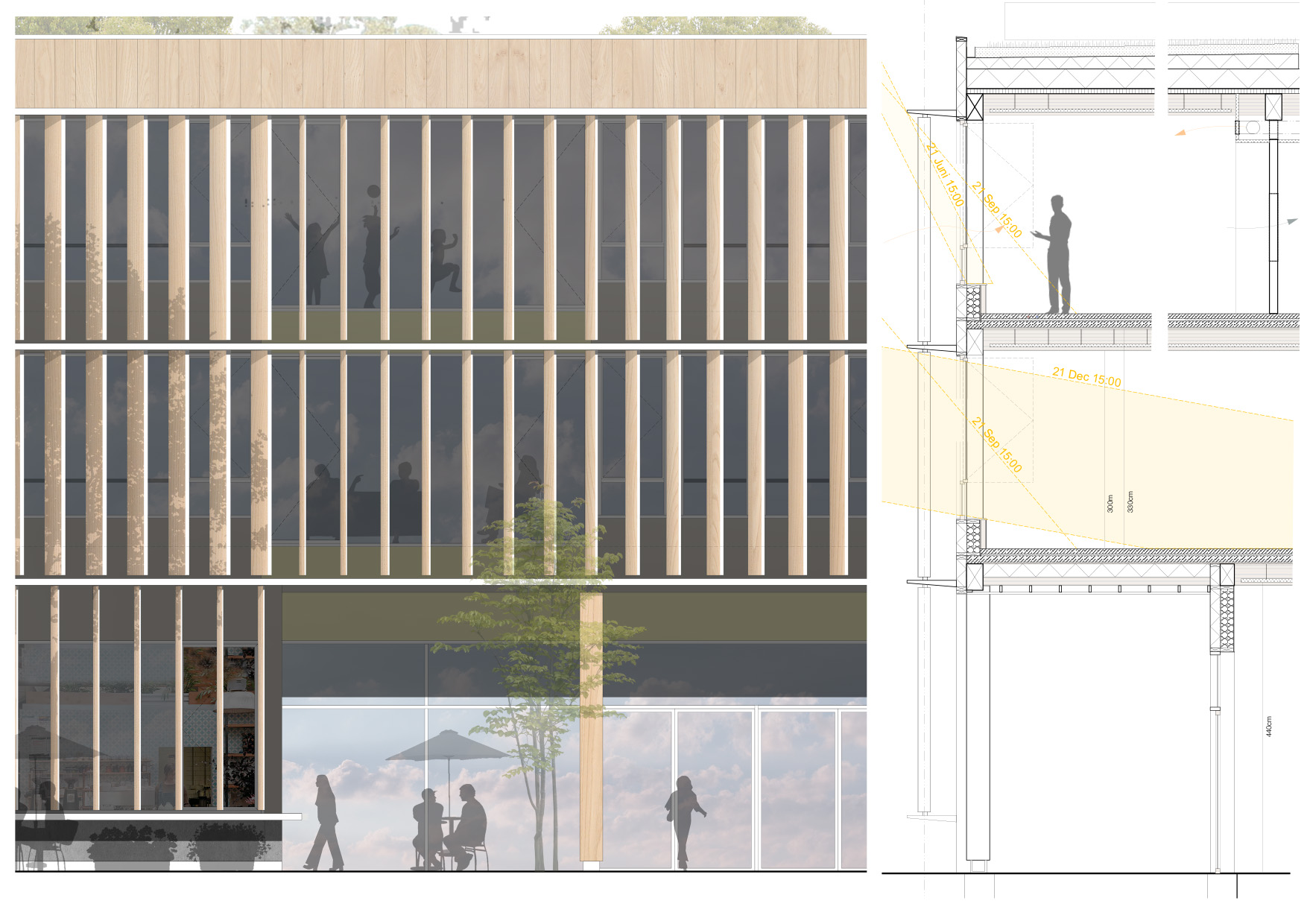
Grundlage des energetischen Konzeptes sind passive Systeme und eine natürliche Belichtung und Belüftung der Lehrräume. Hauptmerkmal ist die passive Verschattung in Form von vertikalen Holzlamellen, die den Neubau ummanteln. Ihre Ausrichtung wird so berechnet, dass sie eine maximale Belichtung im Winter und einen minimalen Hitzeeintrag im Sommer erlaubt. Das passive Verschattungsprinzip wird durch eine wechselwirkende Lüftungs- und Heizungstechnik komplementiert: Eine semizentrale Lüftungsanlage mit Wärmerückgewinnung übernimmt die Zuluftversorgung und leistet mit der Wärmerückgewinnung aus der Raumluft einen wesentlichen Beitrag zum KfW 55- Standard.
In the heart of Striesen, between Schandauer Straße and Prossener Straße, the new school campus of the Freie Montessori School, run by the Huckepack Association, is taking shape.
The footpath between the existing building and the new structure expands into a small square through a recessed entrance in the new building. This square would serve as the main access point to both buildings in the future. A playground will be created on the east side. The courtyard and the public square are connected along a central axis through a transparent shared space. From this central zone, all communal functions, such as the library and the cafeteria, are directly accessible. Entering through the new building’s entrance leads into the heart of the Montessori school: a central atrium extends through all floors, serving as the main circulation space for the new school.
The community building is constructed from a combination of timber frame elements, timber-concrete composite slabs, and load bearing stairwells. The facades consist of prefabricated timber panel elements, ready for on-site assembly. Together with high-performance cellulose insulation, this approach not only ensures energy efficiency during operation but also minimises embodied energy during construction.
The energy concept is based on passive systems for natural daylighting and ventilation of the classrooms. A defining feature is the passive shading system formed by vertical wooden slats that wrap around the new building. Their orientation is precisely calculated to allow maximum daylight penetration in winter while minimizing heat gain in summer. This passive shading strategy is complemented by an integrated ventilation and heating system: a semi-central MVHR unit supplies fresh air and plays a key role in meeting the KfW 55 energy efficiency standard by reclaiming heat from stale air.